In an era where digital commerce handles transactions with algorithmic speed, physical retail serves a fundamentally different human purpose. A store is not merely a distribution point; it is a physical space governed by human behavior. Too often, the market dismisses visual merchandising as a decorative asset. An exercise in simply making spaces look “pretty”.
“Really, the thing about visual merchandising is that it’s applied psychology,” explains Lindy Nolen, Director of Retail Experience at The Bernard Group (TBG). “We’re working at a subconscious level often to create more sales, to create interest, to create trust, to create the ability for people to make well-informed decisions”.
Every element inside a retail environment, from a 40-foot overhead wayfinding sign down to an 8-inch product information card, is actively working at that subconscious level. When executed with strategic intention, visual design calms consumer anxiety and empowers people to navigate spaces effortlessly.
The strongest retail experiences do more than make products easier to buy. They create desire, reinforce identity and translate global brand positioning into experiences that remain recognizable across markets, formats and cultures
Visual merchandising breaks down into three distinct operational areas:
- What is the Role of Visual Merchandising?
- What is the Ultimate Goal of Visual Merchandising?
- How and Where Does TBG Engage in Visual Merchandising?
Part 1: What is the Role of Visual Merchandising?
To understand how visual environments influence shopper behavior, we must examine the six core psychological roles visual merchandising performs across the retail journey.
1. Locate and Attract: Mitigating Spatial Anxiety
Human beings carry a natural, subconscious stress when navigating large, unfamiliar environments. When a shopper is disoriented, they experience cognitive fatigue and focus almost entirely on an exit strategy rather than product discovery.
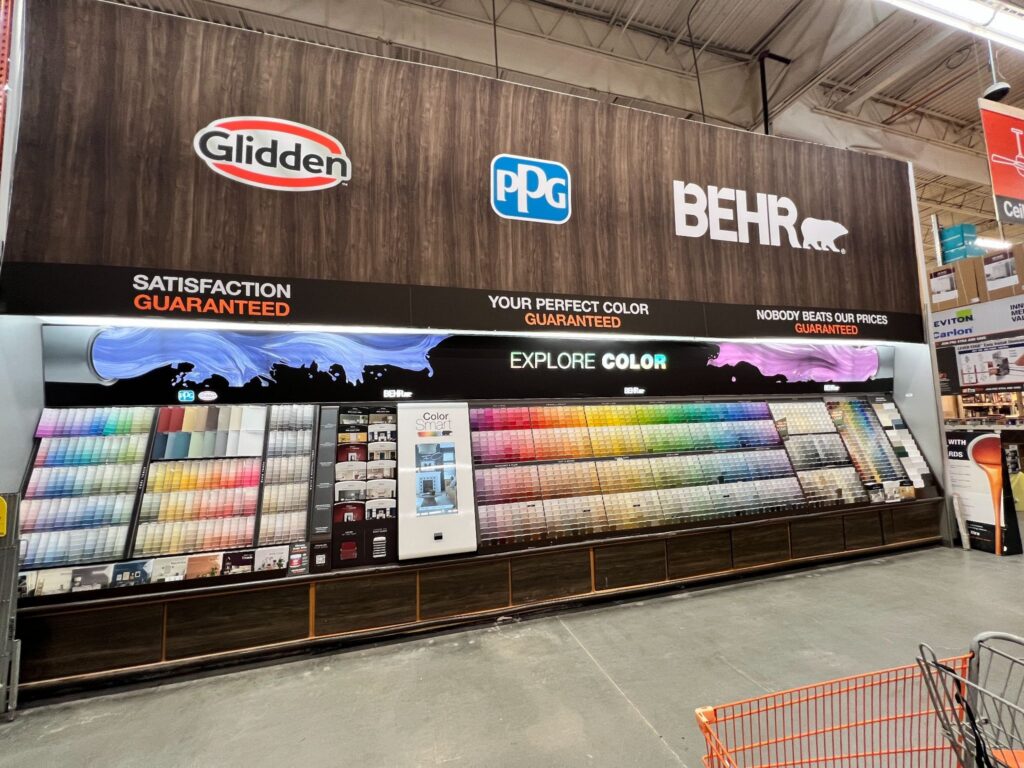
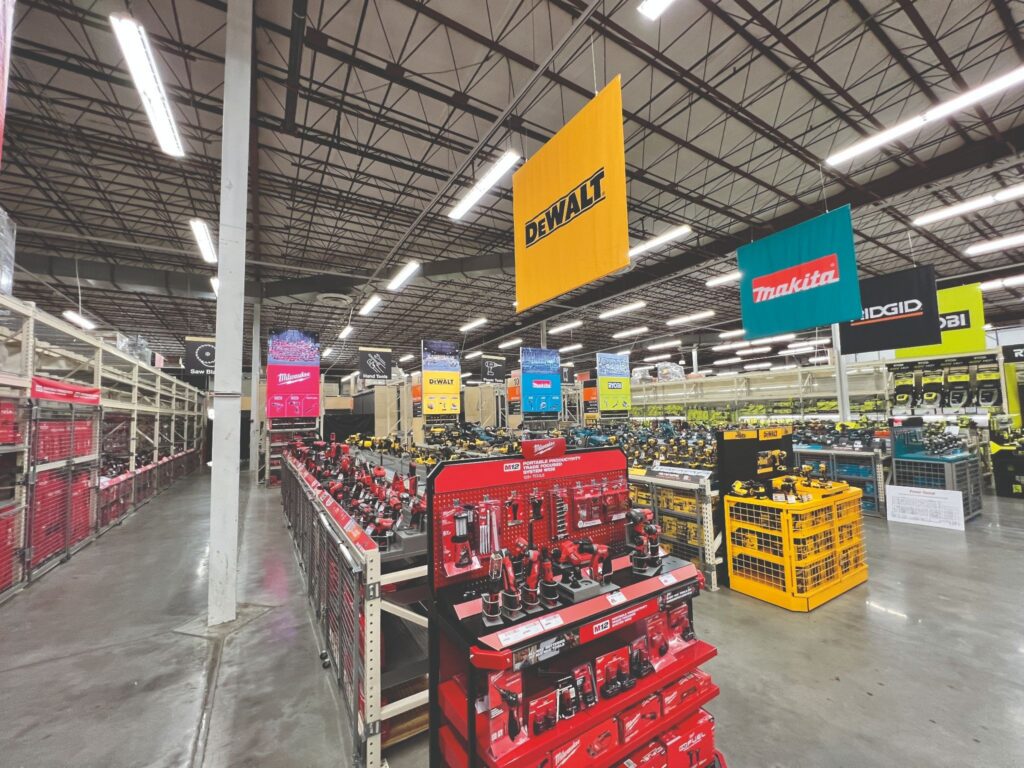
High-altitude visual merchandising and vertical wayfinding serve to ground the consumer. The extensive overhead signage systems engineered for Home Depot power tool and paint departments, featuring high-visibility banners for brands like DEWALT, Makita, Ridgid, and Behr, are not decorative choices; they are spatial anchors. As Lindy Nolen notes, overhead signage in massive footprints gives customers immediate clarity from across the store, allowing them to enter a relaxed state of product exploration once they arrive at their destination.
“Well-considered environments create hierarchy before they create decoration. Architecture, sightlines, product density and communication should quietly show customers where to look, guide customers where to move and focus their attention on what matters most.” Lindy Nolen.
2. First Impression: Establishing Immediate Scale & Stopping Power
Customers base their initial impression of a brand on how it presents itself the moment they enter a physical footprint. The entrance of a store is a high-stimulus threshold where consumers shift from external distractions—parking logistics, packed schedules, family demands—into the shopping mindset.
Visual merchandising sets the tone at this threshold by creating sheer visual stopping power. In high-concept activations like the Adidas 4DFWD running experience or the Adidas Superstar relaunch at Dick’s Sporting Goods, introducing a larger-than-life hero element—such as a giant replica shoe paired with custom turf floor markings—forces shoppers to physically slow down, break out of their fast-paced walk, and engage with the brand immediately.

3. Inspire: Visual Merchandising as an Identity Mirror
Consumers rarely purchase premium goods solely for their mechanical utility. Physical retail acts as a tangible reflection of self-identity; people shop to reinforce who they believe they are or who they aspire to become. Visual merchandising taps into this psychology by constructing immersive environments that evoke deep emotion and bridge the gap between everyday reality and high-level aspiration.
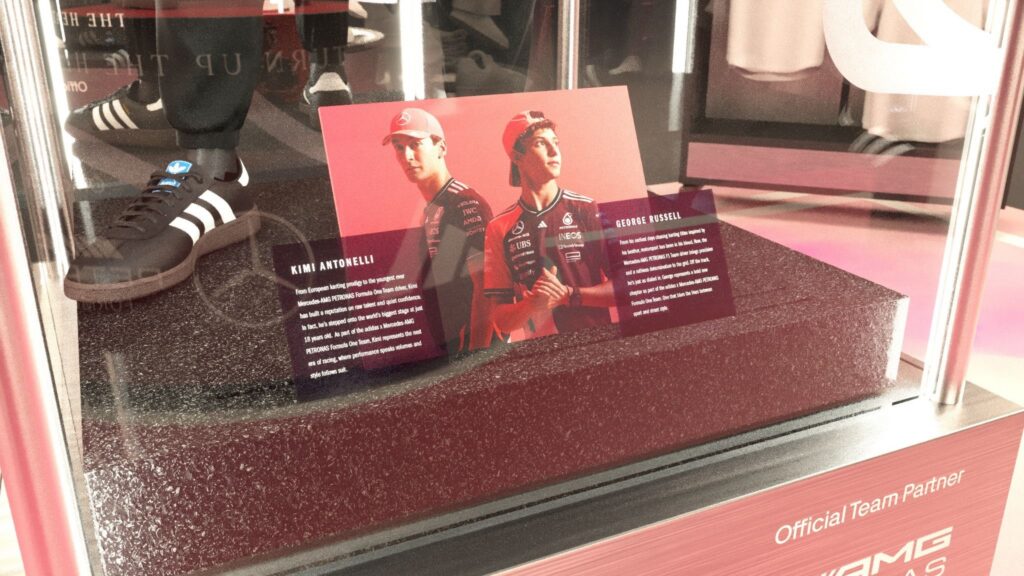
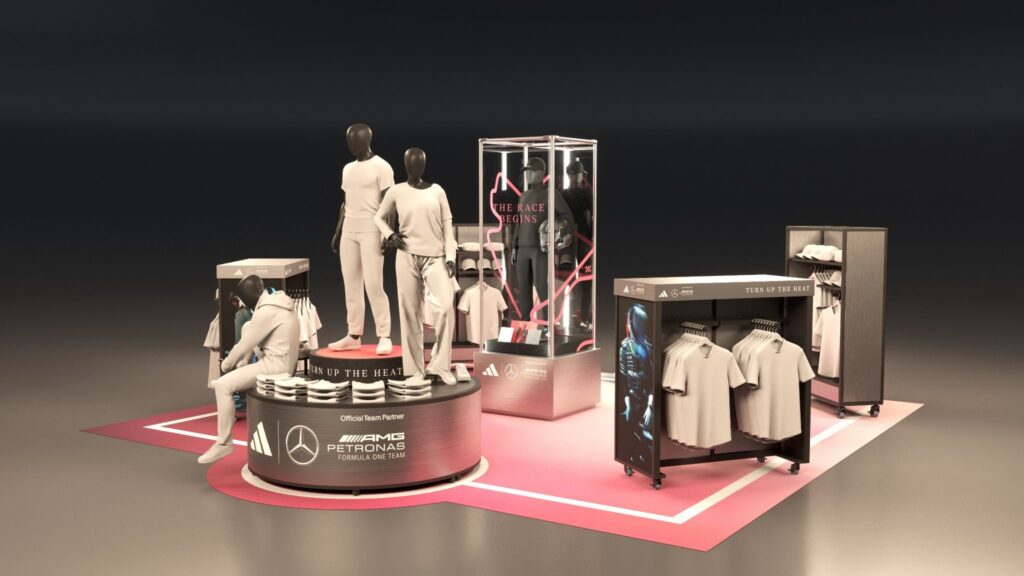
This behavior is especially evident in elite sports and motorsport branding activations, such as the Mercedes-AMG PETRONAS F1 racing displays or the Adidas x Zoe Saldaña collection. The vast majority of shoppers stepping up to an F1 display case featuring drivers Kimi Antonelli and George Russell will never drive a $4 million race car or stand on a podium. They do not need a lecture on technical carbon-fiber specifications.
Instead, the true purpose of the environment—with its sleek glass display cases, “The Race Begins” pit-stop framing, and authentic track textures—is to capture the raw spirit of the sport. The average fan may never own the race car, but they can easily afford a $35 branded baseball cap or apparel piece that connects them to that elite lifestyle. The visual space creates an emotional bridge, articulating what the product represents to the shopper’s identity.
4. Messaging: Mastering Clear Communication
When communicating with shoppers on a busy retail floor, less is almost always more. Industry research reveals a striking reality: shoppers read less than 2% of the written text displayed on in-store signage. Dense walls of copy are instantly filtered out by over-stimulated minds. Effective visual merchandising requires stripping back the visual clutter and adopting smarter, tech-enabled ways to guide decisions.
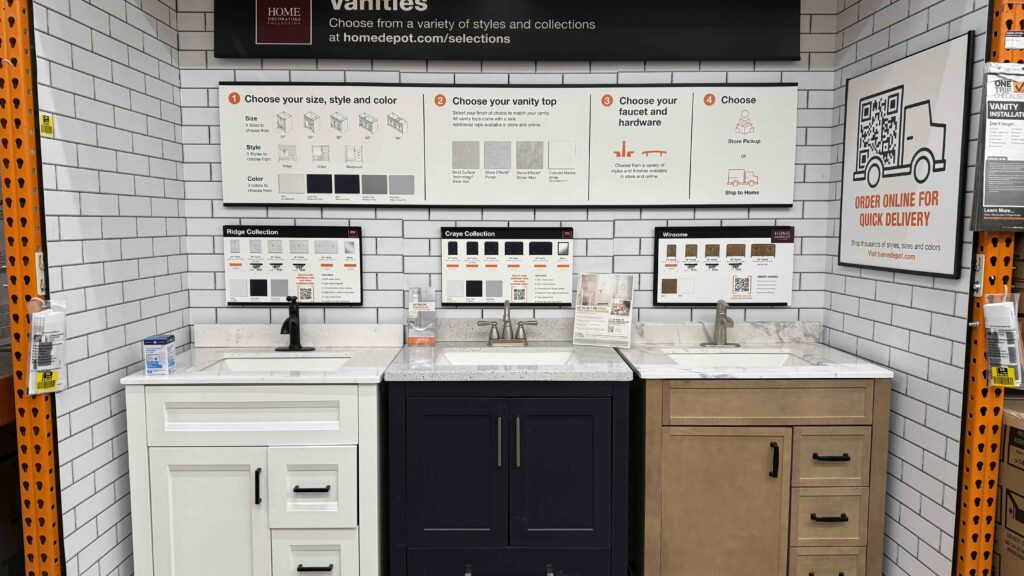
A powerful example of this streamlined approach can be seen in Home Depot’s bath vanity department. Facing the challenge of presenting hundreds of custom size, finish, and style options without completely overwhelming the sales floor, Home Depot integrated QR codes directly into compact physical displays under a clear 3-step guide (“Choose your size, style and color; Choose your vanity top; Choose your faucet and hardware”). By allowing shoppers to scan a code and instantly explore dimensions and color variants on their phones, Home Depot condensed what traditionally required 90 feet of sprawling shelf space into a sleek 90-inch footprint.

5. Create a Sense of Ease and Comfort
When a customer considers a purchase over $400, their decision-making process shifts entirely. High-ticket sales are rarely impulse buys; they require psychological comfort, semi-privacy, and an environment that actively reduces stress. If a retail space feels awkward, exposed, or rushed, shoppers instinctively hesitate or walk away empty-handed. Visual merchandising plays a vital role here by creating dedicated “breathable spaces” that give customers the physical and emotional room they need to commit.
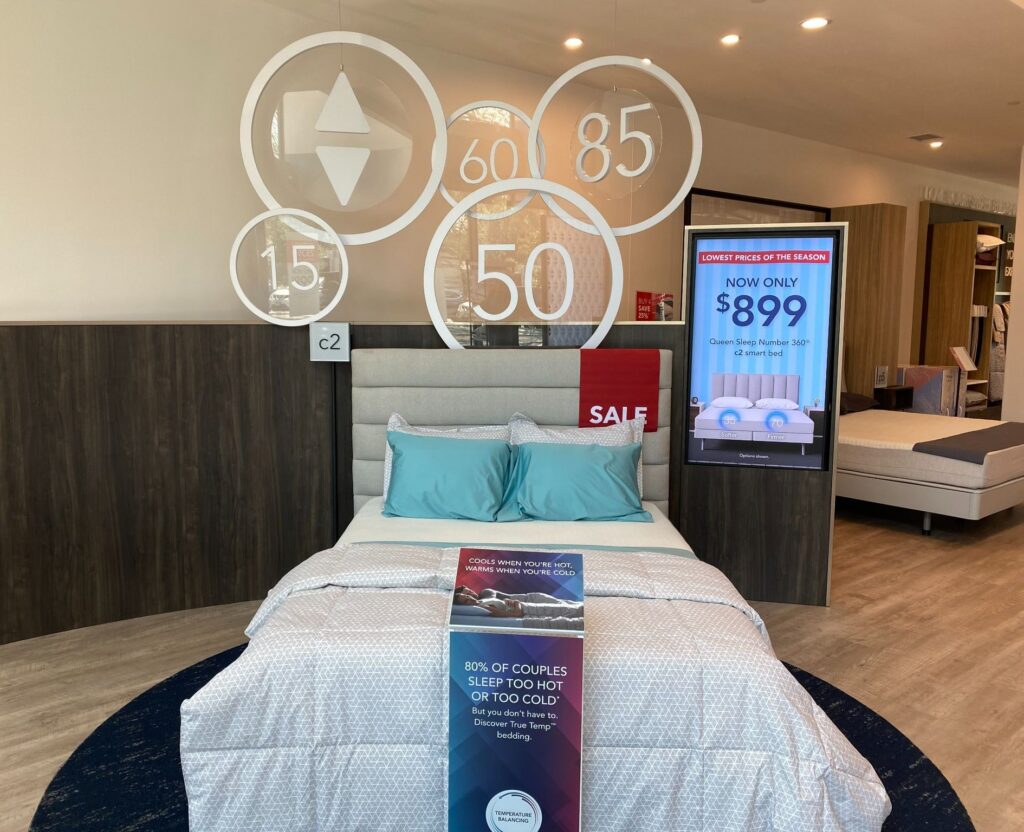
Designing for comfort means lower environmental frustration where complex decisions happen. In tech environments, this takes the form of clean “Tech Bars” with comfortable seating and balanced lighting. In bedding, Sleep Number provides a masterclass in spatial psychology. Testing a mattress in an open retail showroom is an awkward experience. To overcome this, Sleep Number designed specialized, semi-private alcoves featuring soft temperature messaging (“Cools when you’re hot, Warms when you’re cold”). Stepping into a quiet, cozy niche lets shoppers test products without feeling self-conscious, making the decision to invest in a high-ticket mattress feel effortless.

6. Encourage Purchase: Capturing Planned & Impulse Conversion
Converting shopper intent into final purchases requires placing easy purchasing opportunities as they enter the check-out line. Near high-traffic checkout zones and payment counters, Point of Purchase (POP) displays target the home stretch of the shopping journey when customers are in a prime psychological state for quick add-ons.
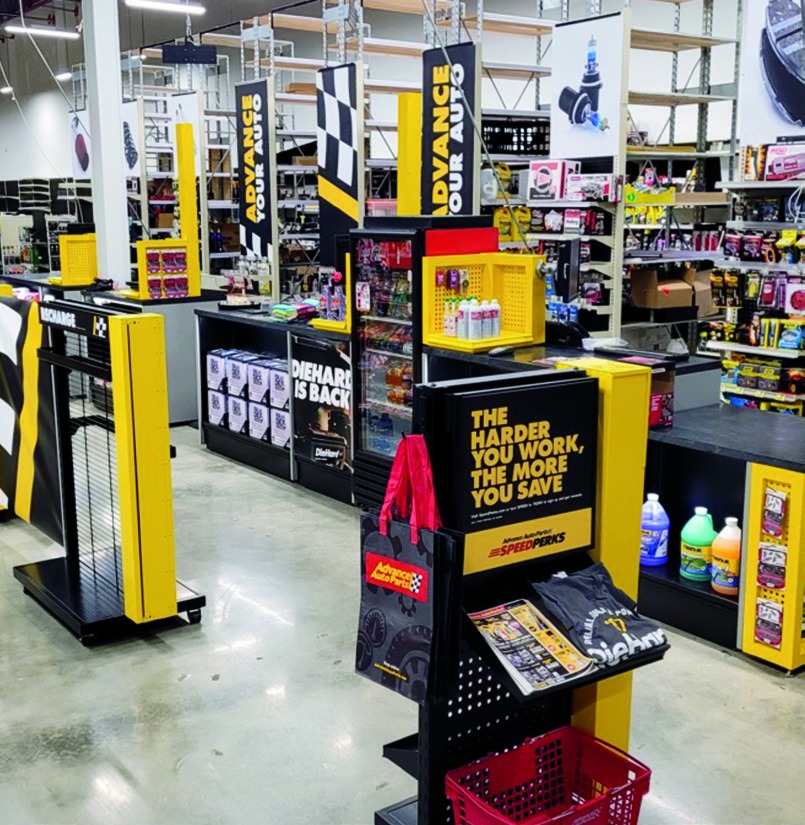
Sephora accomplishes this through dedicated “Minis & More” fixture towers featuring brands like Kaja and Patrick Ta, encouraging shoppers to grab travel-sized items right before paying. Similarly, Advance Auto Parts surrounds service counters with bold “The Harder You Work, The More You Save” staging, showcasing high-margin impulse essentials like DieHard batteries, wiper fluid, and beverages.
Part 2: Ultimate Goal & Types of Visual Merchandising
The Ultimate Goal: Increasing Basket Size & Return on Footprint
When retailers and brands invest in visual merchandising, the ultimate objective is transparent: customers must feel encouraged, empowered, and excited to buy more products. The goal is to raise the dollar value of the shopper’s basket, increase sales margin, and maximize return on retail space by driving planned purchases, inspiring impulse add-ons, and building long-term brand loyalty.
Achieving this requires deploying specific visual merchandising types across the store layout:
- Entry Decompression Zone (Target $1 Spot, Adidas Superstar Launch)
- Overhead Wayfinding Signage (Home Depot Power Tools & Paint)
- Experiential Pause Environments (Dick’s Golf History Lounge, YETI Pavilion)
- Point of Purchase Checkout Queues (Sephora Minis, Advance Auto Parts Counter)
1. Store Layout & Architectural Decompression
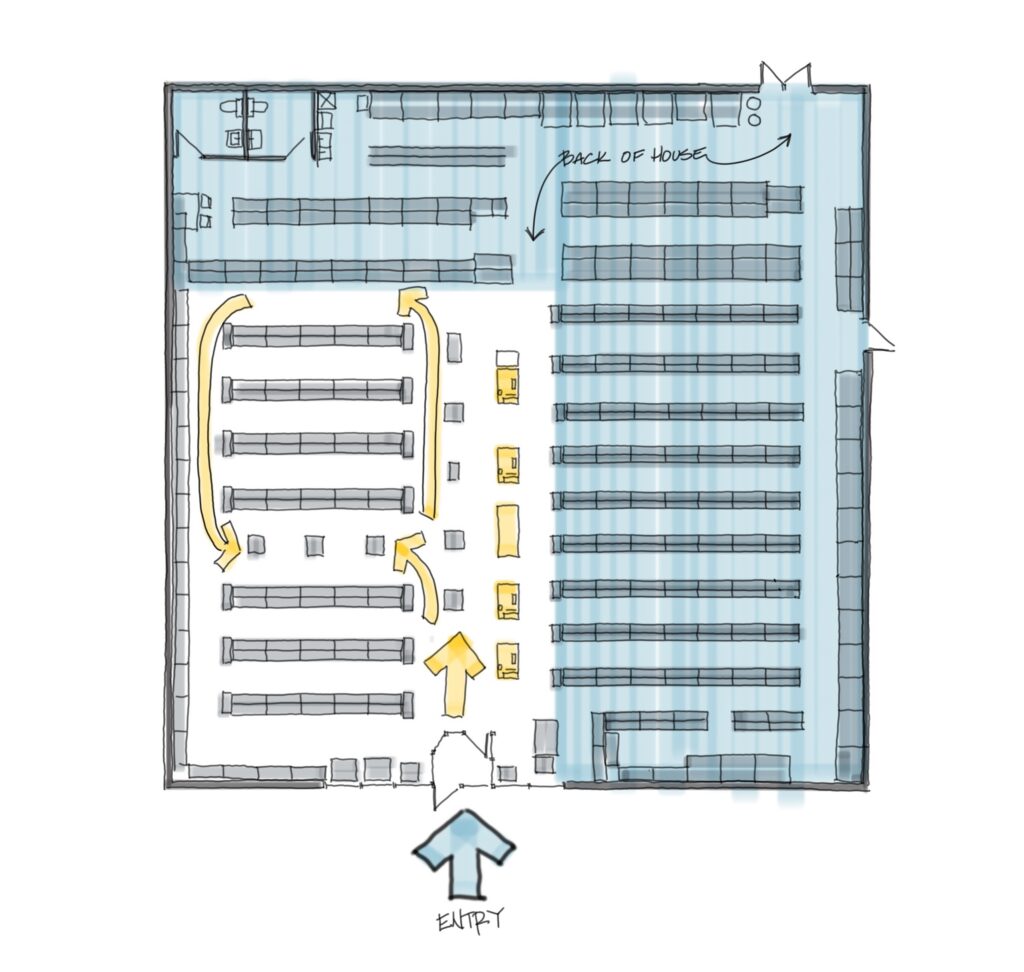
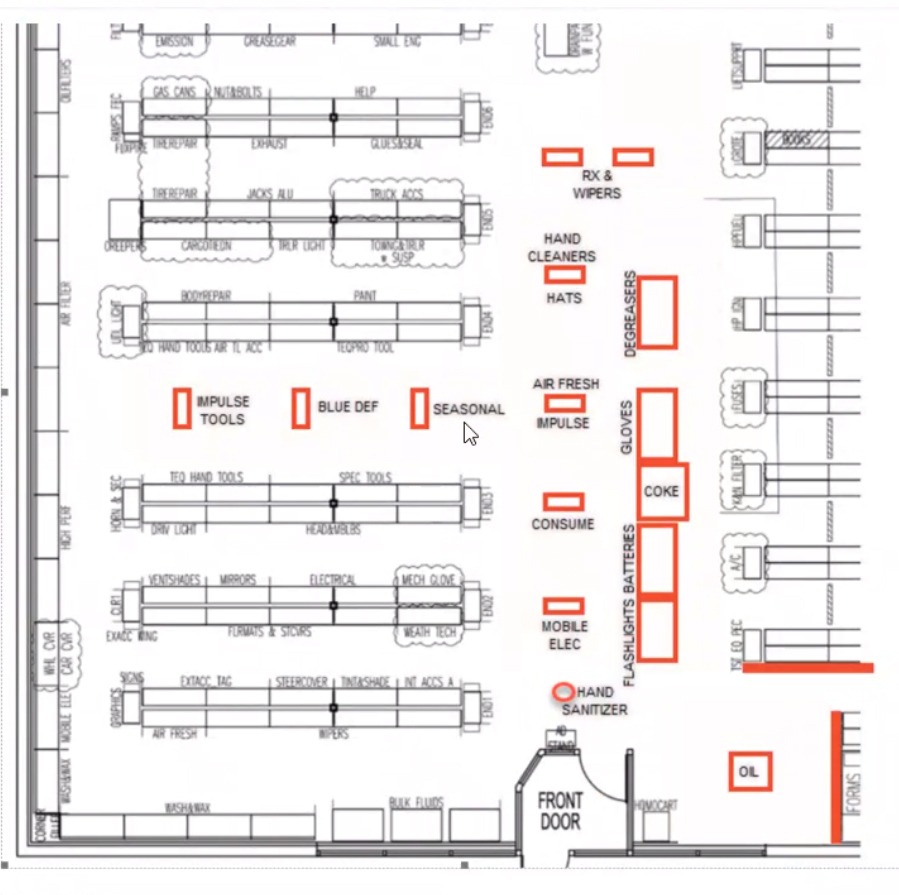
Store layout considers the customer’s entire physical flow—mapping product categories, service desks, and points of sale from front to back. At the threshold, layouts must provide a psychological decompression zone.
Consider Target’s iconic “One Spot” (Bullseye’s Playground) at the entrance. Utilizing lower 8-foot gondolas packed with seasonal items under $20 serves a dual behavioral purpose: appeasing children settles the shopping party so parents linger longer, while placing that first quick $5 item into the cart breaks the invisible psychological barrier to purchase, making shoppers far more receptive to higher-ticket items later in the trip.
2. Design Decisions: Finishes & Experiential Pauses
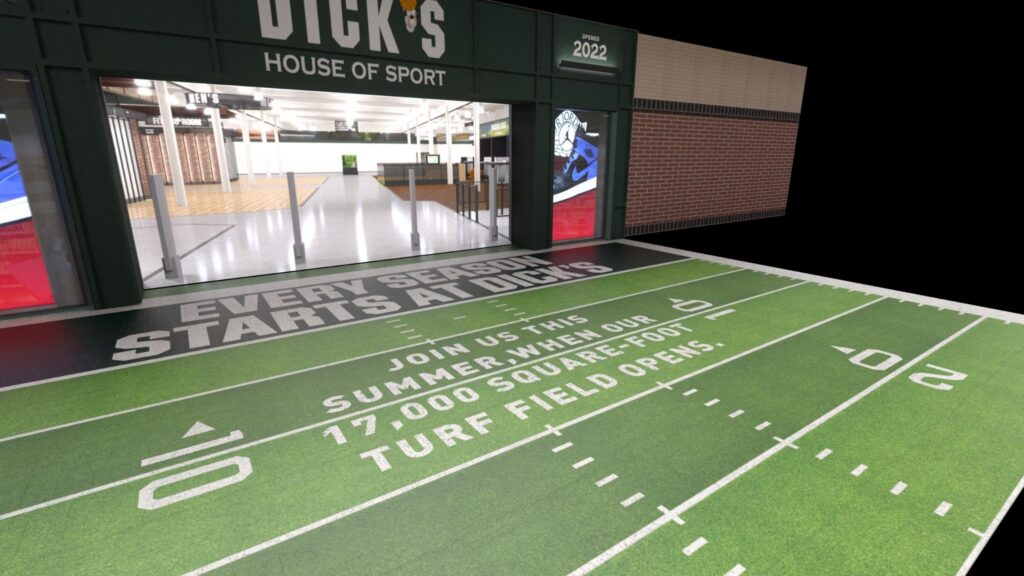
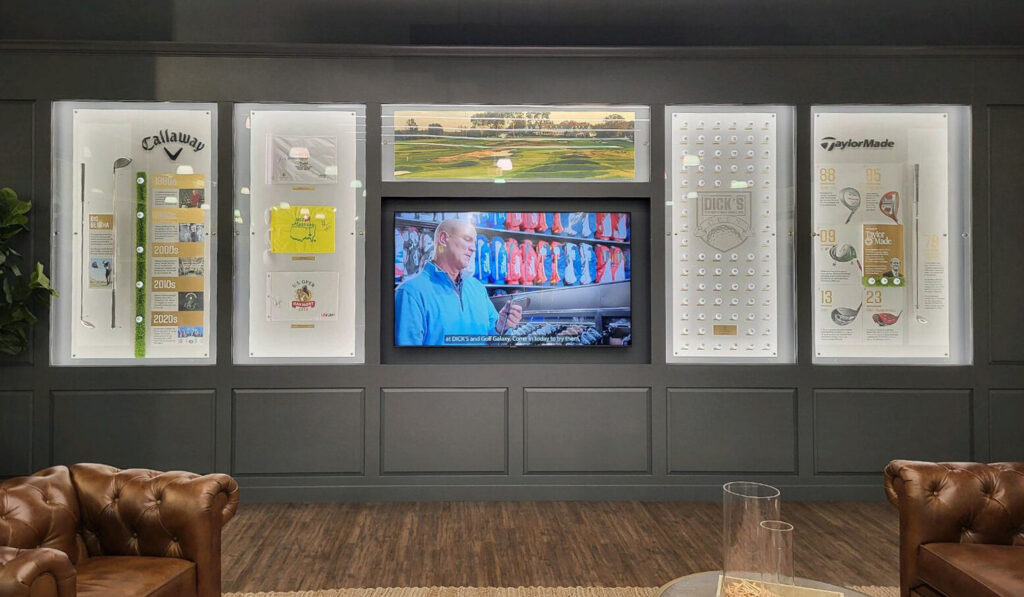
Flooring, textiles, lighting, and materiality establish a permanent expression of a brand’s aesthetic. Integrating adjacent rest areas—such as the leather-sofa golf history lounge inside Dick’s Sporting Goods featuring Taylormade heritage walls, or custom turf track floor treatments—creates essential “pause moments”. These areas reset consumer fatigue, transforming a routine errand into an engaging event and encouraging shoppers to linger longer.
3. Interior Displays & Environmental Storytelling
In-store displays combine product and décor to convey brand values, particularly regarding sustainability. In the Adidas “End Plastic Waste” campaign displays, the visual story physically walks the shopper through a circular journey: intercepted ocean plastic waste is shown alongside processed pellets, spun textile fibers, and finished footwear. Pulling sustainability pillars directly into the fixture bridges the gap between consumer ethics and purchasing decisions.
This storytelling is supported by material science innovations that preserve luxury aesthetics without landfill waste:
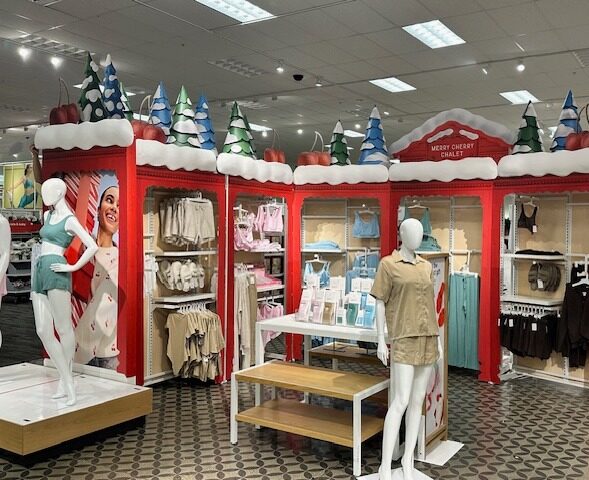
- Engineered Paper Pulp: Seasonal displays like Target’s holiday snow-drift setups replace heavy vacuum-formed plastics with dimensional paper pulp featuring integrated tabs, allowing tool-free assembly in minutes and going directly into standard back-of-house recycling after use.
- Mushroom Mycelium: In high-end footwear displays for Adidas at Kohl’s, organic mycelium is grown into structural molds to replace non-recyclable expanded PVC shoe risers, decomposing safely when broken apart at the end of life.
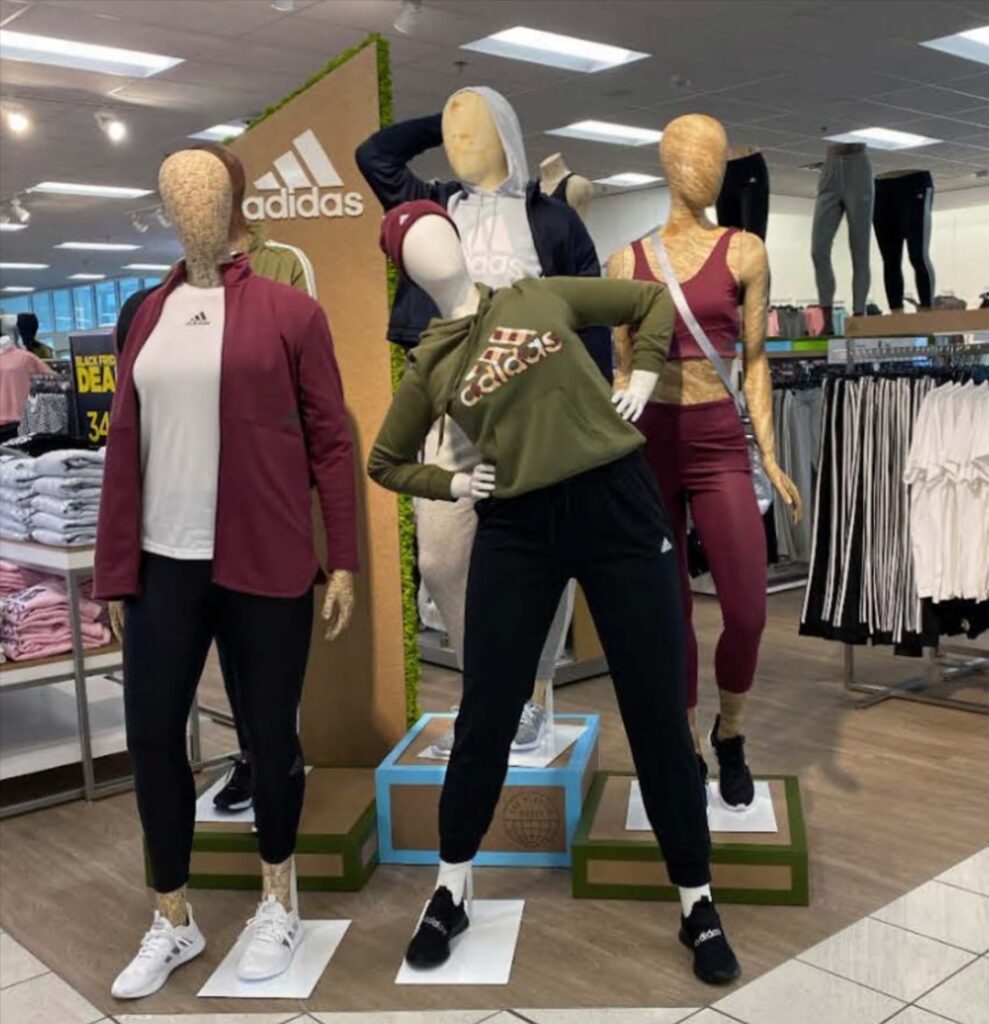
4. Mannequins: Communicating Real-World Representation
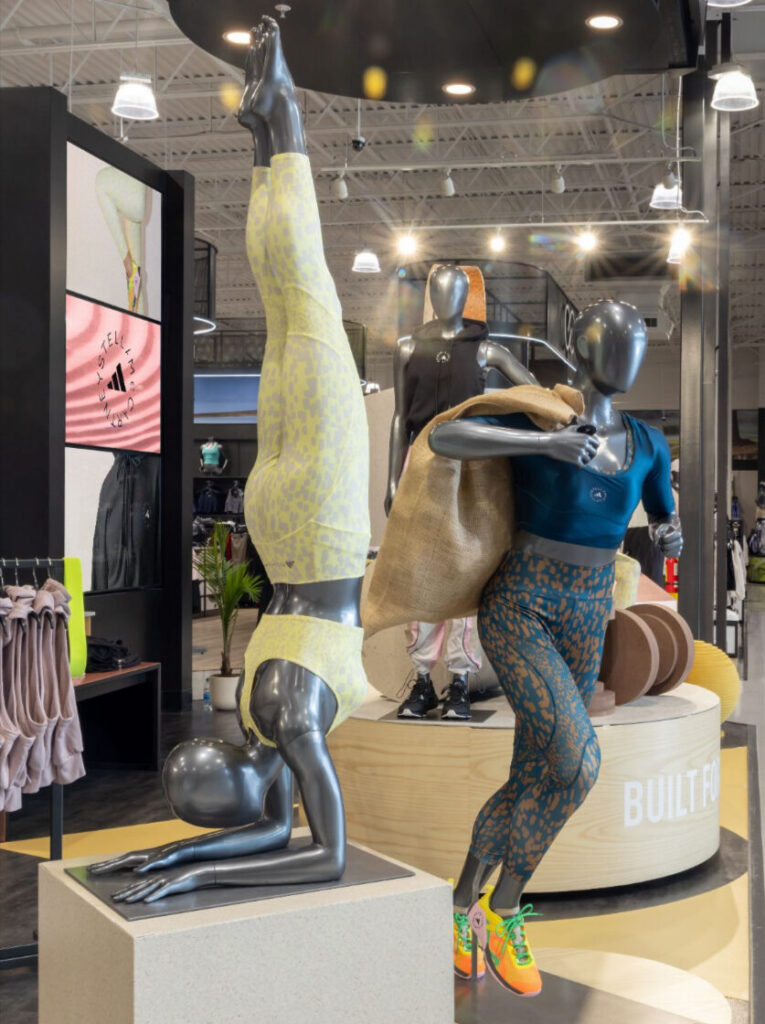
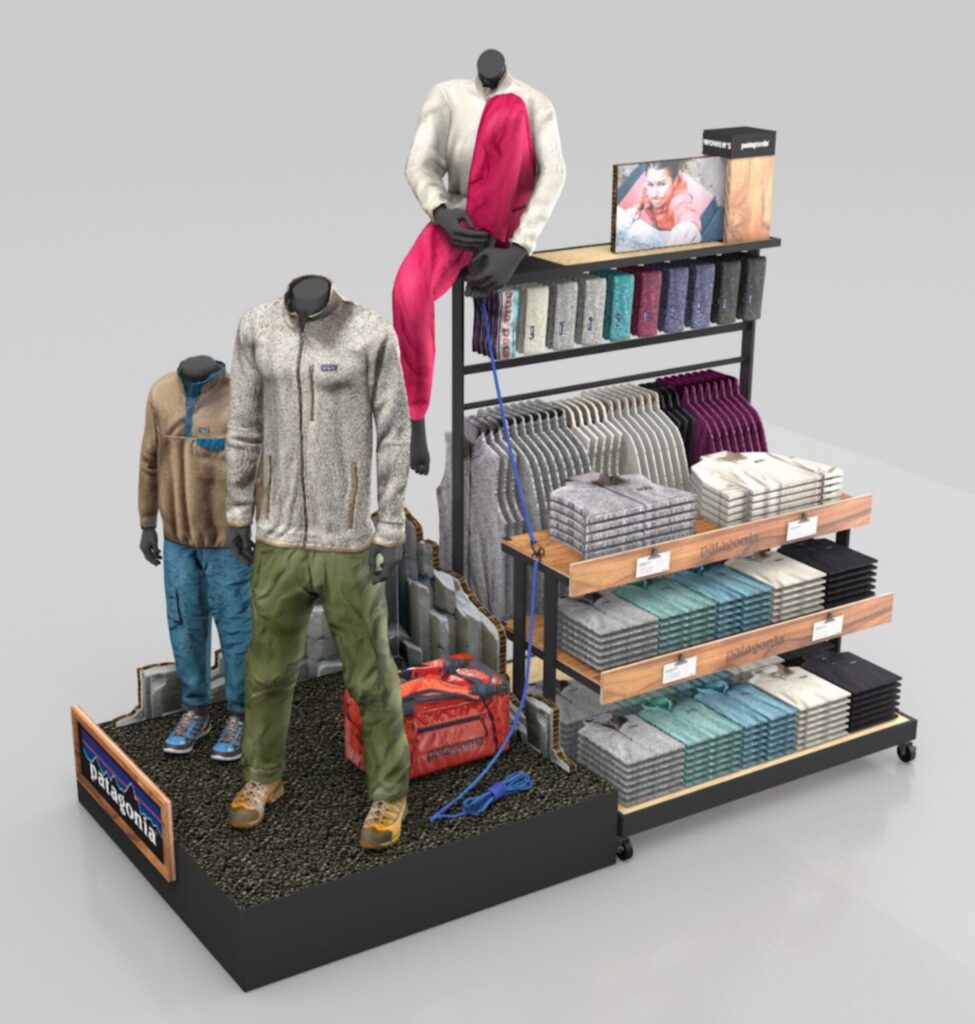
While some retailers eliminated mannequins due to maintenance costs, their operational impact is measurable. When Target re-introduced mannequins to display apparel in real-world context rather than folded flat on tables, sales lifted by 400%. Showing fit, movement, and complete styling options directly drives dollar value in the basket.
5. Point of Purchase (POP) Displays
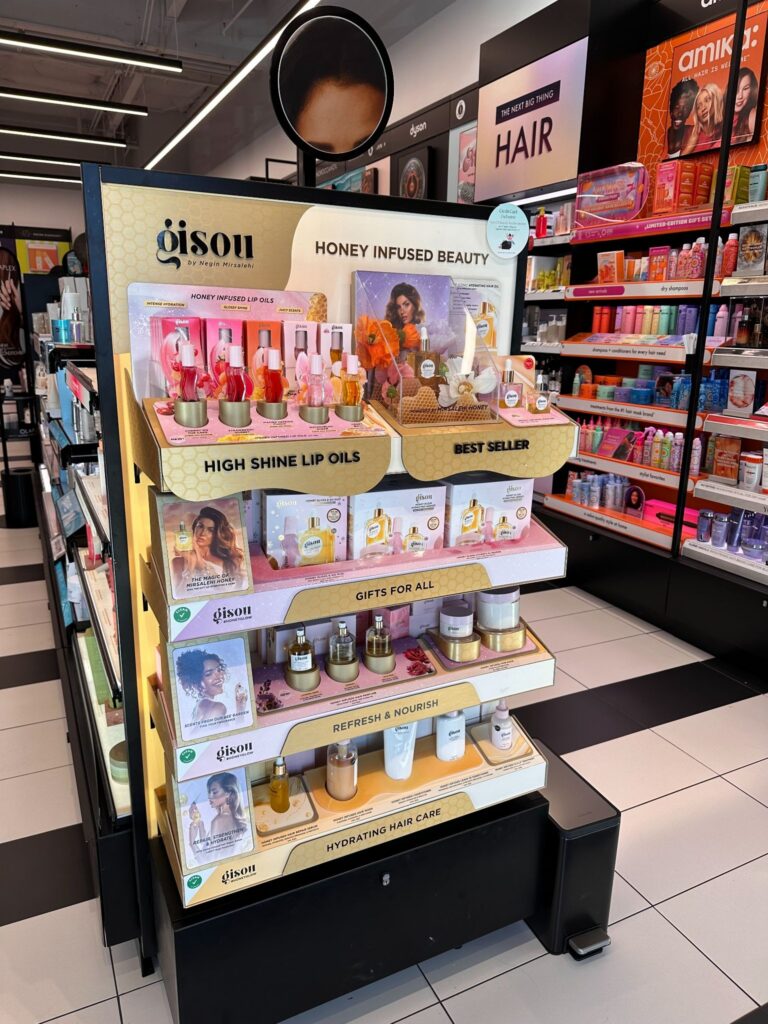
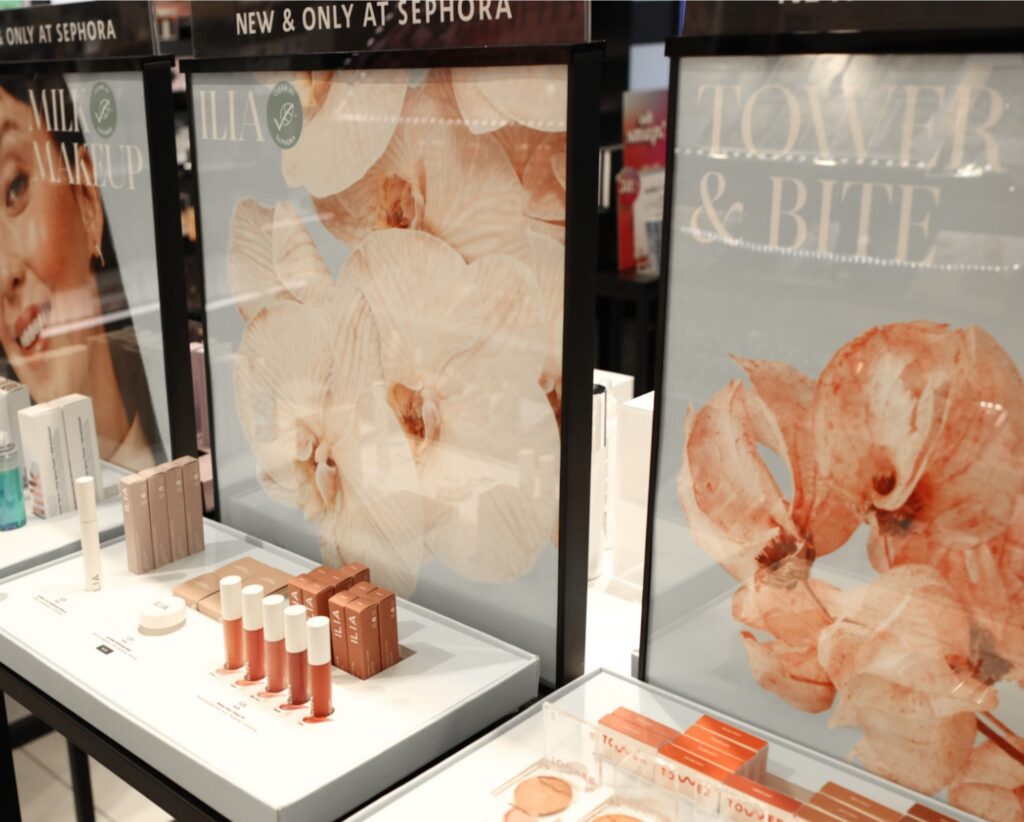
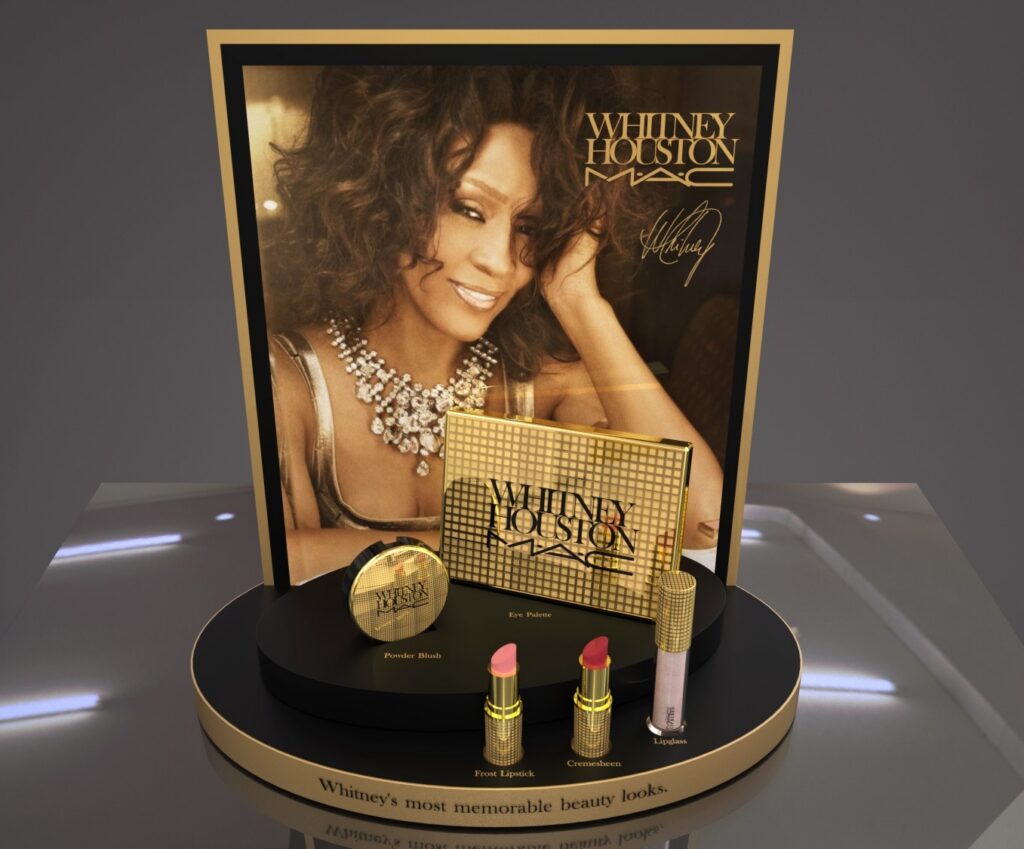
Dedicated POP displays and counter units, such as MAC counter setups or Sephora’s “New & Only” beauty fixtures, drive final basket additions right at the point of sale. Surrounding checkout queues with clear, accessible products captures high-margin impulse sales that would otherwise be forgotten.
6. Product Bundling & Cross-Merchandising
Product bundling displays complementary items together to show shoppers how products interact in real life. Merchandising custom Jibbitz charms directly alongside Crocs footwear visually prompts customers to personalize their shoes on the spot. Similarly, pairing Sephora Collection facial wipes directly alongside sheet masks under “Clean Skincare Under $8” visually teaches a complete skincare routine, capturing instant add-on sales.


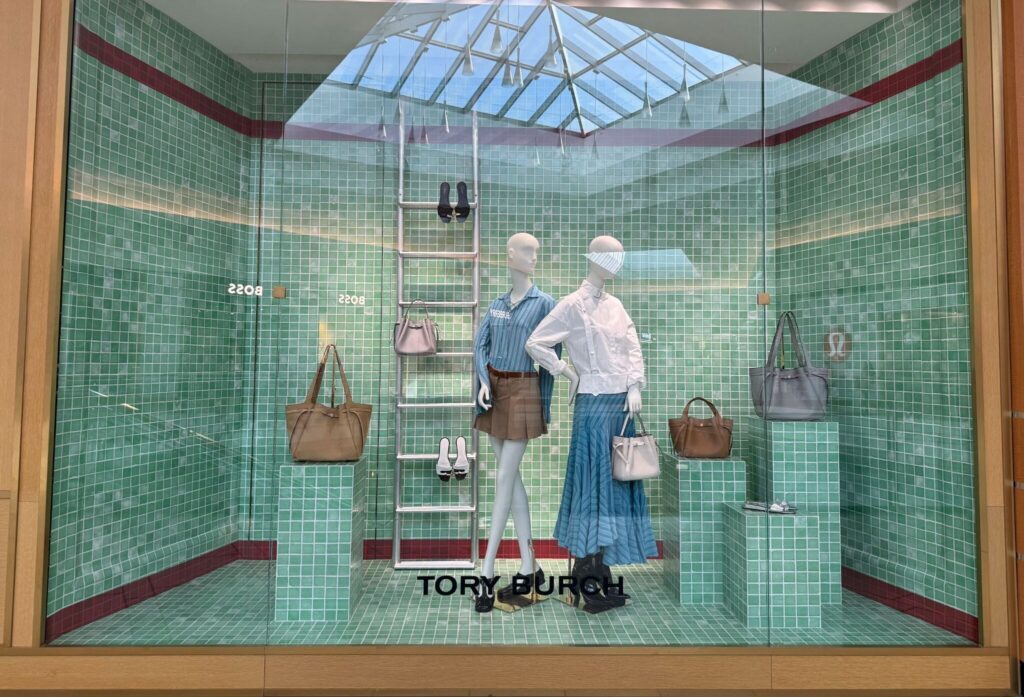
7. Window Displays: Architectural Versioning
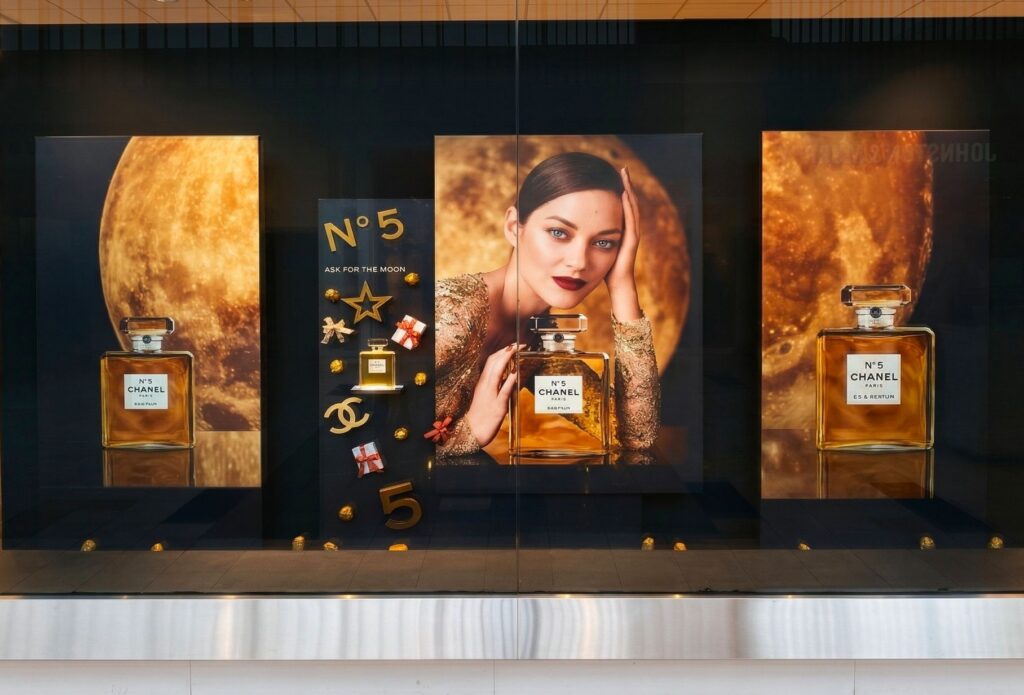
Window displays act as a brand’s ultimate visual handshake, catching the attention of passing traffic for luxury houses like Tory Burch or Chanel No. 5. Executing these displays nationally requires site assessments and precise dimension scaling to ensure that print files, lighting, and framing fit varied architectural storefronts perfectly.
8. Exterior Fixtures: Engineering for the Elements
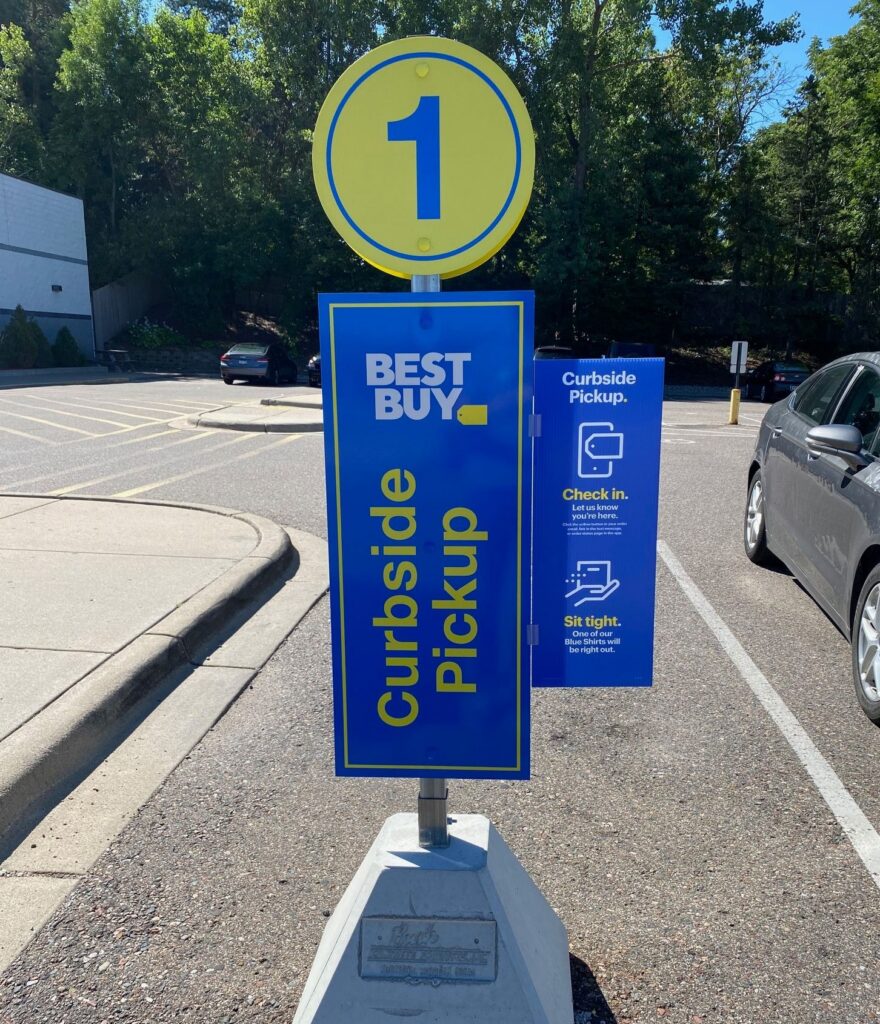
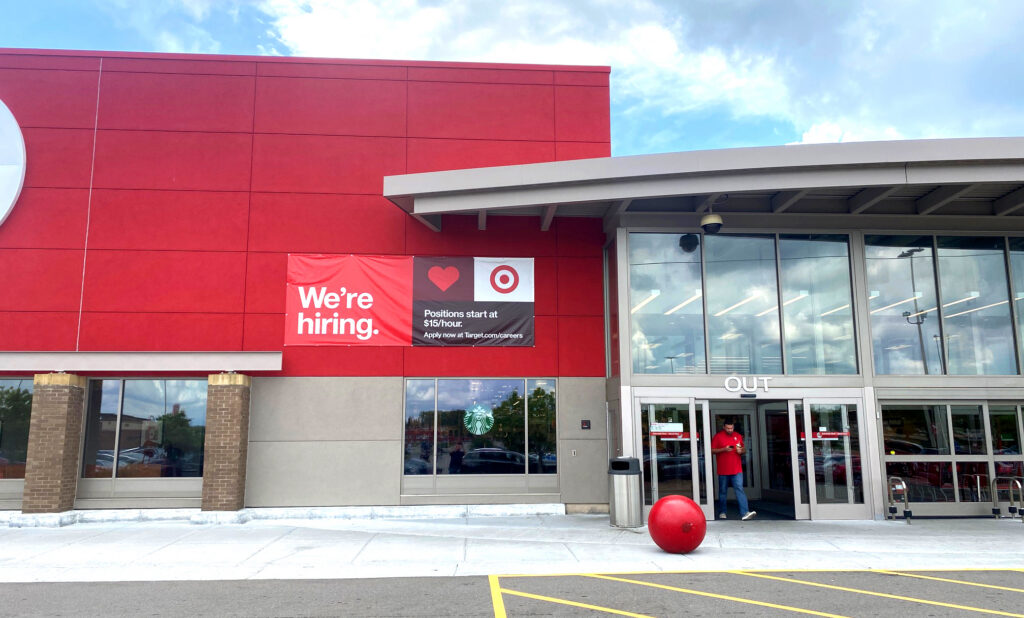
Exterior elements—such as Best Buy curbside pickup stanchions, parking lot marquees, and Target hiring banners—provide the very first impression of a retailer. Designing durable outdoor visual merchandising demands deep research into material science and tensile strength to withstand UV exposure, sub-zero temperatures, ocean moisture, and coastal salt spray without peeling or tearing.
9. Seasonal Displays: Calendarized Impact
Temporary holiday builds, such as Target’s “Merry Chalet” pajama displays or Dick’s Sporting Goods’ “House of Sport” tree towers, refresh consumer interest on a predictable, high-impact cadence. These displays drive “fear of missing out” (FOMO) while utilizing tool-free paper structures for easy end-of-season recycling.

10. Product Information: The “Silent Salesperson”
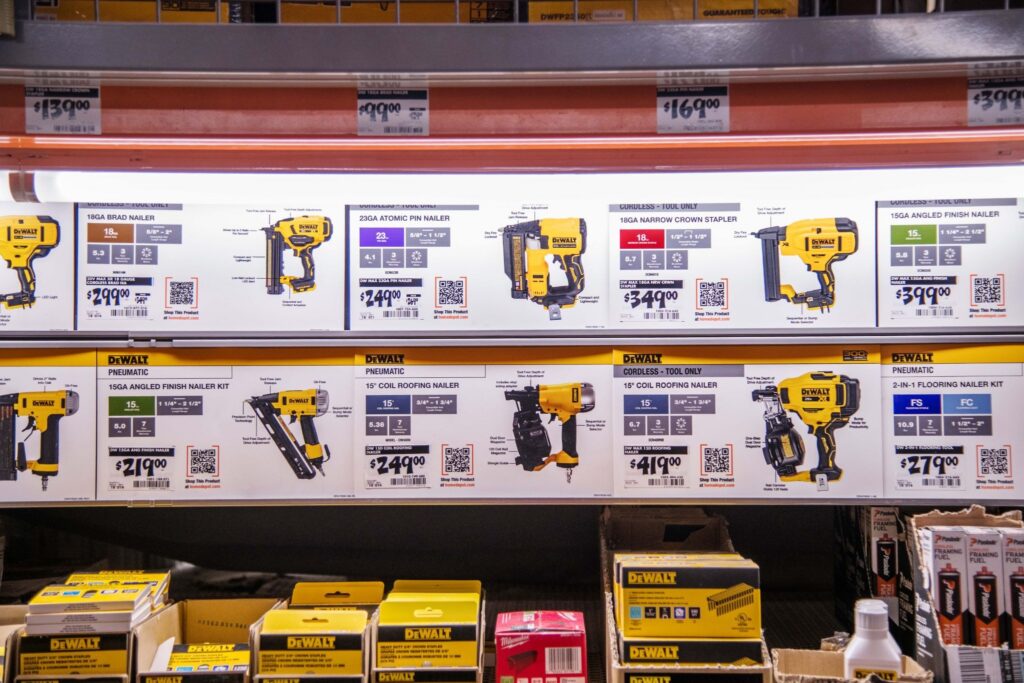
When communicating complex technical features, visual merchandising acts as a “silent salesperson”. Historically, high-value pneumatic nail guns at Home Depot were displayed chained to tool bays, creating a cluttered wall of steel cables.
By removing the physical tools entirely and replacing them with clean, high-definition Ridgid product cards integrated with QR codes, Home Depot standardized features, benefits, and tool compatibility across every brand. The cards replicated mobile app comparison behavior, enabling instant evaluation and driving a staggering 300% sales surge.
11. Store Environment: Dynamic Spatial Transformations
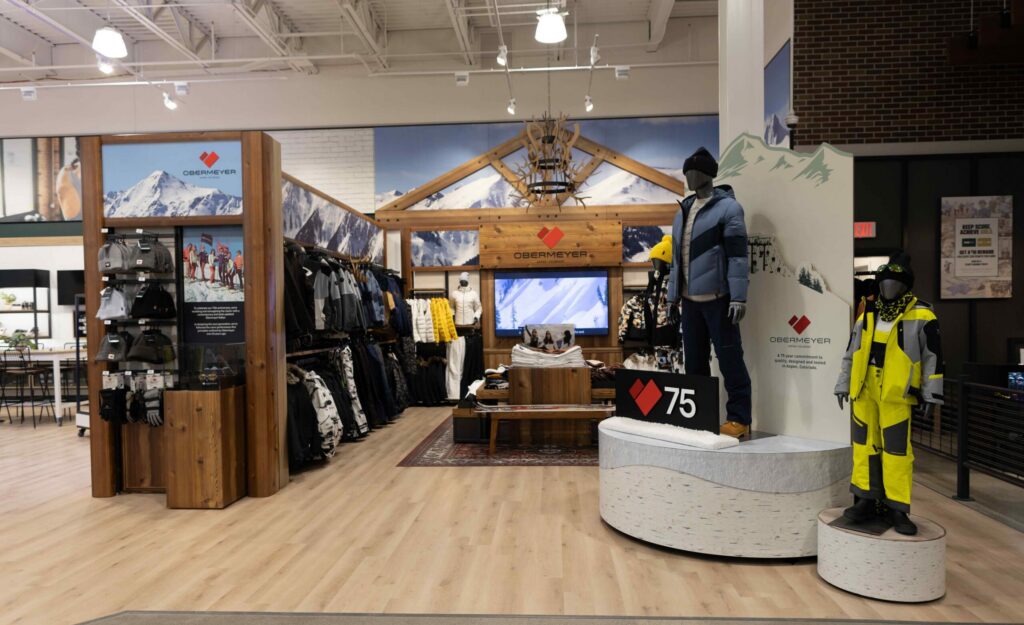
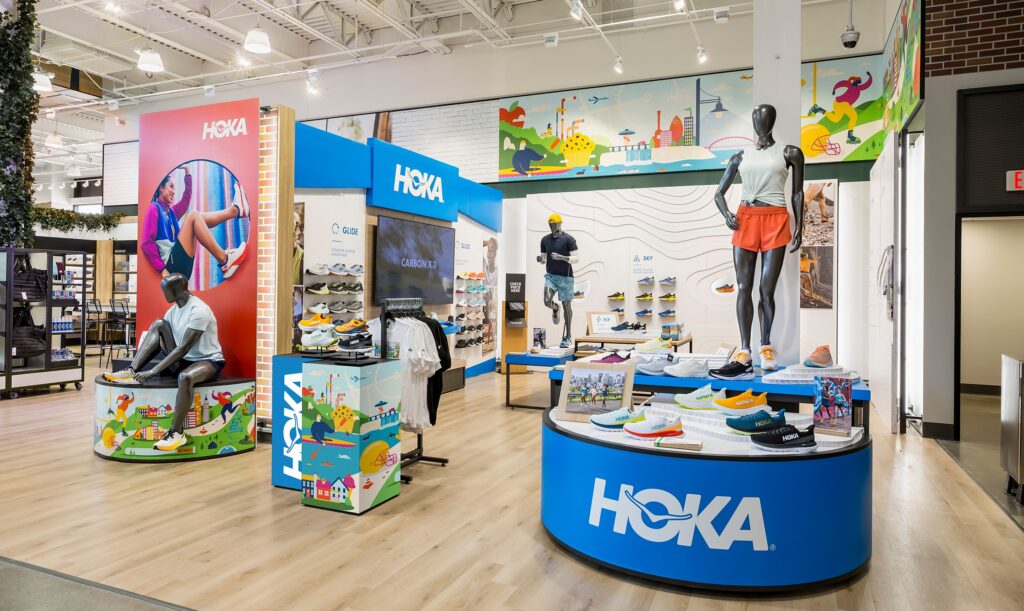
Flexible perimeter spaces allow a single footprint to repeatedly transform throughout the year. In specialized spaces inside Dick’s Sporting Goods, fixture wraps, floor graphics, and backdrops completely redefine the atmosphere depending on the featured brand:
- HOKA: A bright, high-energy running hub featuring colorful graphic pillars.
- Obermeyer: An alpine ski lodge environment complete with warm timber finishes and a 75th-anniversary milestone display.
- YETI: A rugged outdoor pavilion highlighting “Rescue Red” and “Nordic Blue” colorways around a custom “Lake of the Woods” floor decal.
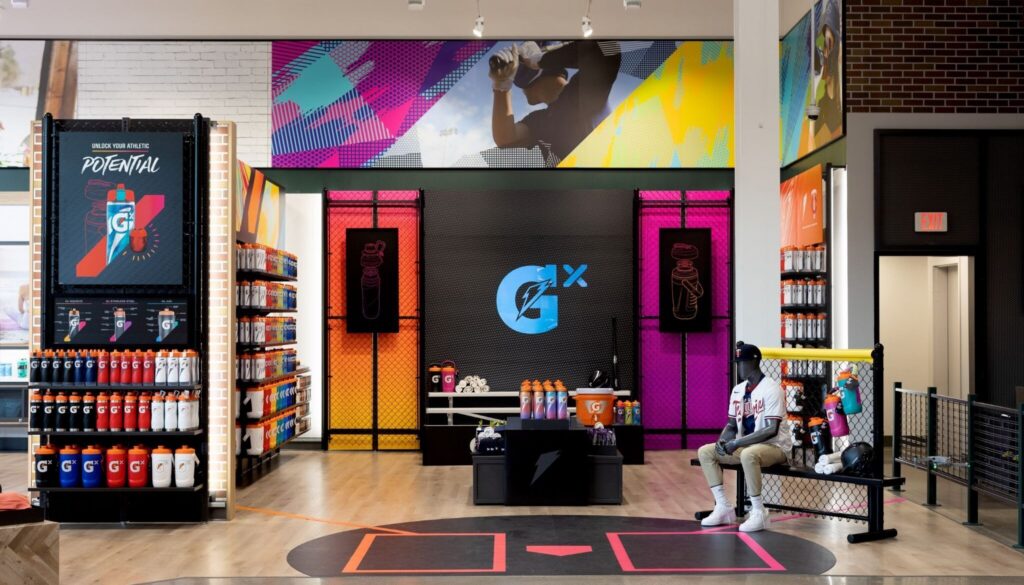
- Gatorade: An athletic dugout setup complete with “Unlock Your Potential” messaging, stadium bench seating, and pink home-plate floor graphics.

Part 3: How and Where TBG Engages in Visual Merchandising
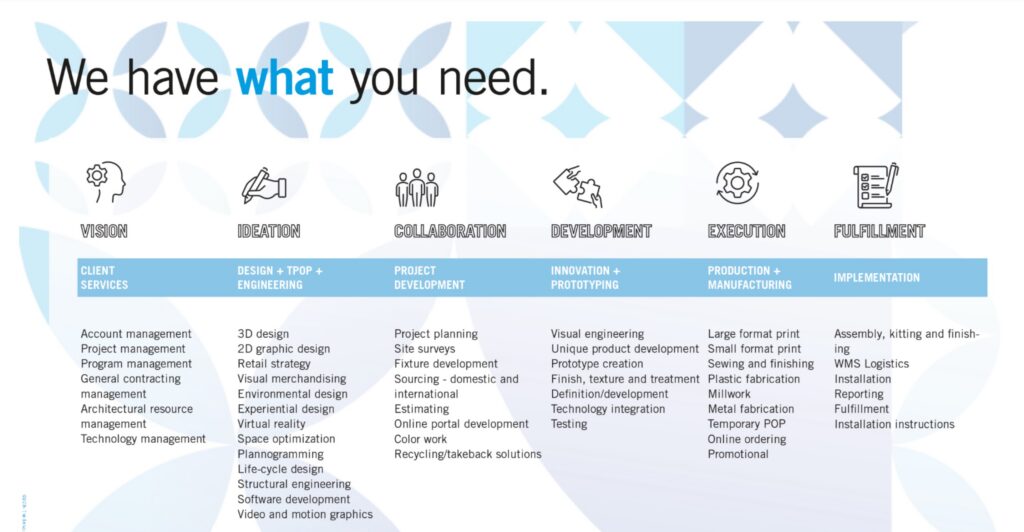
Translating high-concept strategy into national execution requires an end-to-end operational throughline. TBG engages across the entire spectrum of visual merchandising—from initial vision and retail strategy down to site surveys, prototyping, large-format manufacturing, WMS logistics, and field installation.
The TBG spectrum of engagement moves seamlessly through five key phases:
- Vision & Ideation: Grounded in retail strategy, 3D design, environmental design, and space optimization.
- Client Services: Account, project, and program management, detailed project planning, and site surveys.
- Innovation & Prototyping: Visual engineering, prototype creation, material testing, and structural engineering.
- Manufacturing & Production: Large and small format print, plastic and metal fabrication, millwork, and custom finishing.
- Implementation & Logistics: Assembly, kitting, WMS logistics, field installation, and repair/maintenance services.
Whether executing high-fashion window displays for Tory Burch, engineering sustainable paper pulp snow drifts for Target, or re-engineering back-of-house racking for Advance Auto Parts to drop installation times from four weeks to four days, the objective remains constant: to raise the dollar value of the shopper’s basket. By bridging human psychology, material science, and engineering precision, visual merchandising transforms the physical retail floor into an engine of intentional business growth. Get in touch to bring your next retail strategy to life.