

In 2026, sustainability in retail has moved past the “feel good” marketing phrase and into the era of systematic accountability and operational mandate. With California’s landmark environmental policies now in active effect, the retail landscape has shifted from voluntary “green” initiatives to mandatory circularity. At The Bernard Group (TBG), we are helping our national and international partners navigate these complex regulations without sacrificing the premium aesthetic their brands demand.
Shifting to sustainable retail substrates is crucial, not just for compliance, but also for upholding a premium brand aesthetic and supporting a circular economy. This guide provides an overview of the materials and regulations that are defining the retail landscape in 2026.
Key Takeaways:
- California’s SB 54 and SB 1053, effective in 2026, mandate a significant shift in responsibility for plastic waste and packaging, requiring all single-use packaging to be recyclable or compostable by 2032, and eliminating the “reusable” plastic bag loophole.
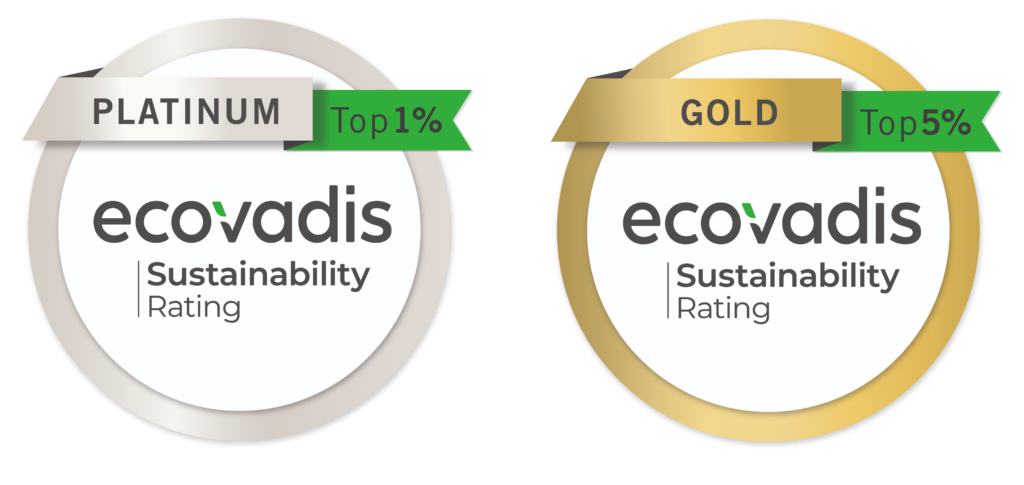
- The Bernard Group is committed to sustainable practices, evidenced by certifications like Forest Stewardship Council® (FSC®), EcoVadis Gold/Platinum, and ISO 14001, as well as the adoption of recycled and sustainably sourced materials.
- The Bernard Group is promoting sustainable retail substrates:100% Recycled Acrylic, FSC®-Certified Rigid Paper Board, 100% Recycled PETG, and Post-Consumer Waste Cardstock.
- The Bernard Group has created sustainable retail environments for brands like adidas, Drunk Elephant, and Patagonia.

The Shift: What are California’s SB 54 and SB 1053 Policies?
Compliance requirements are becoming stricter, moving past simple “recyclability.” This is particularly evident with the impending full implementation of California’s SB 54 (Plastic Pollution Prevention and Packaging Producer Responsibility Act) and the SB 1053 plastic bag ban, both of which took effect on January 1, 2026. Mandatory reporting and active enforcement are now part of our current reality.
California SB 54: Extended Producer Responsibility (EPR)
SB 54 (The Plastic Pollution Prevention and Packaging Producer Responsibility Act) is now in active implementation. For a national retail partner like The Bernard Group, the focus has shifted from “recyclability” to circularity and data transparency.
- The Definition of “Producer”: While the brand owners are the primary “producers,” any entity that “introduces” covered material into California (including certain distributors) can be held responsible.
- Covered Materials: All single-use packaging and “printed paper” (including retail signage and promotional inserts) are now under the oversight of the Producer Responsibility Organization (PRO).
- 2026 Milestone: For 2026, producers are required to report 2024–2025 material data and pay annual dues.
The End of the “Thick Plastic” Loophole
The closure of the “thick plastic” loophole has been made official: retailers are now prohibited from dispensing plastic film bags at the point of sale, irrespective of their thickness. This regulatory change has initiated a significant “De-selection of PVC” throughout the retail sector, prompting brands to transition toward alternatives like paper-based materials or genuinely durable, multi-use fixtures.
How California’s Mandates Affect Retail Partners like The Bernard Group
By 2026, for TBG and its partners, compliance will transcend mere “green-washing” to become a matter of legal and financial accountability.
- Material Audits: Companies must provide precise weight and resin data for all “printed paper” and “packaging” for client PRO reporting.
- PVC Transition: TBG’s leadership in sustainable substrates (e.g., paper honeycomb, PVC-free vinyl) is vital as “eco-modulated fees” raise costs for harder-to-recycle materials like PVC.
- Modular Fixture Design: TBG aids clients in meeting the 25% plastic reduction goal by 2032 (Source Reduction reward in SB 54) by replacing single-use displays with permanent, modular fixtures using replaceable, recyclable inserts.
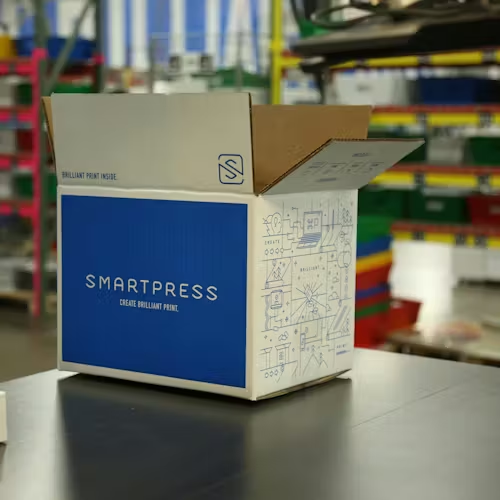
Fun Fact: The Bernard Group, along with their online division, Smartpress, has consistently demonstrated a commitment to innovation and early adoption of healthier sourcing practices across displays, fixtures, and product packaging. This dedication is reflected in several key areas, including:
- Certifications and Audits:
- Forest Stewardship Council® (FSC®) Chain of Custody (FSC COC) Certified Wood + Paper ensures responsible sourcing of wood products.
- EcoVadis Gold and Platinum ratings recognize robust sustainability management systems.
- ISO 14001 certification demonstrates adherence to environmental management standards.

- Material Sourcing:
- The use of recycled magnets in display components.
- Sustainable Packaging Initiatives:
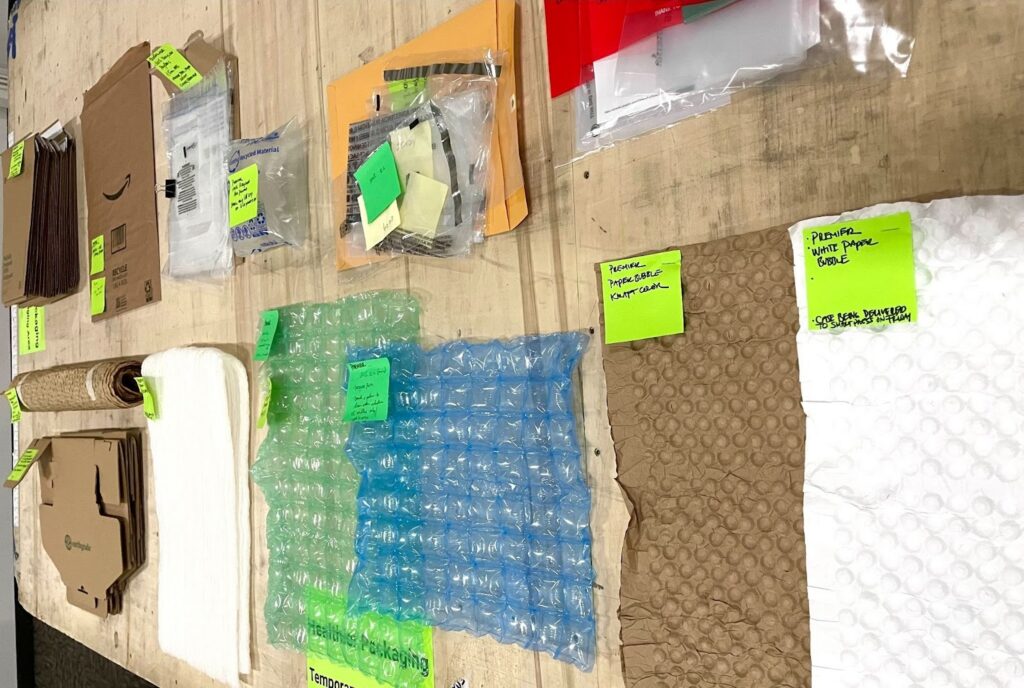
- Polybags: Transition to a polybag version made from 100% recycled content.
- Shipping Boxes: Utilizing boxes made with at least 60% recycled content.
- Tapes: All three-inch clear plastic tapes have been replaced with rolls made from recycled content.
- Bubble Wrap: Using bubble wrap that incorporates recycled content.
- Kraft Paper: Employing kraft paper that is both recyclable and made with 100% recycled content.
Top Sustainable Retail Substrates for 2026 Branded Experiences
Material selection in retail displays has evolved beyond mere aesthetics; it’s now fundamentally about the End-of-Life (EOL) story. The following substrates are leading the charge for sustainability in 2026:
1. 100% Recycled Acrylic

- Key Feature: Digitally-treated clear extruded acrylic material offers optimal clarity.
- Best Application: Business/retail signage, fixtures and POP displays
2. FSC®-Certified Rigid Paper Board

Designed to preempt legislative action like SB 54 against problematic plastics, this board offers a bright white, triple-coated surface that perfectly mirrors the look of Sintra without the environmental cost.
- Key Feature: Constructed from 100% FSC®-certified virgin wood fibers.
- Best Application: Ideal for high-end retail inserts and foundational navigational signage.
3. 100% Recycled PETG
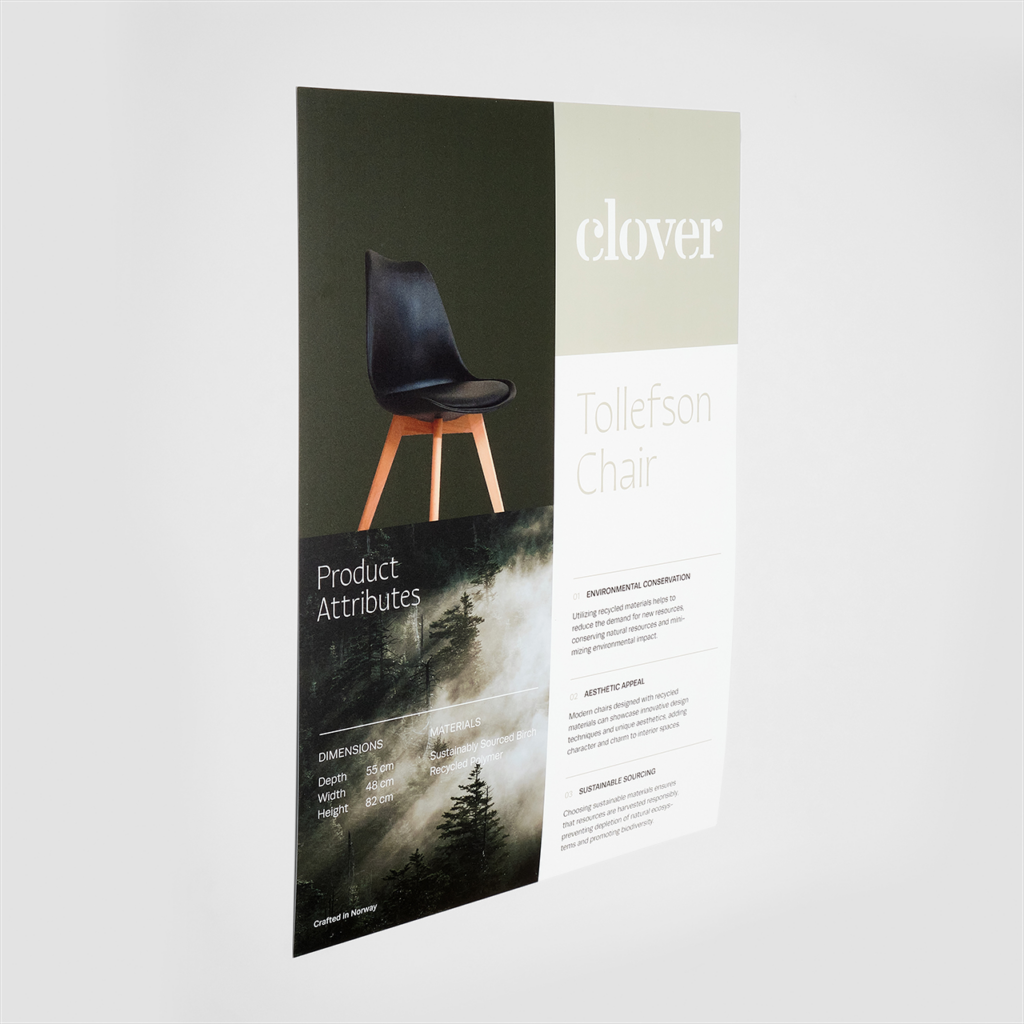
For brands requiring the rigidity and clarity of materials like styrene or acrylic while adhering to strict recycled-content mandates, Recycled PETG is the solution.
- Key Feature: Contains up to 100% recycled content (guaranteed minimum of 50% post-consumer scrap).
- Sustainability Edge: It is highly rigid and easily fabricated, maintaining plastic waste within a closed-loop system.
4. Post-Consumer Waste Cardstock
This cardstock is truly local, sourced and manufactured right here in Minnesota.
- Key Feature: Made from 100% post-consumer waste, featuring a clay-coated surface for superior, vibrant color reproduction.
- Pro Tip: Maximize your environmental impact by combining this substrate with our Carbon Neutral Program for a truly zero-impact campaign.
What is The Bernard Group’s Total Sustainability Strategy?

Sustainability is a core standard at The Bernard Group. We have achieved 100% Carbon Neutrality for Scopes 1 and 2 emissions across our facilities. Furthermore, we are actively prioritizing the mapping of Scope 3 emissions to ensure complete transparency throughout our supply chain.
Rigorous Testing for Professional Standards
Our commitment goes beyond simply “good enough for green.” We believe that true sustainability requires a holistic approach, which is why we meticulously vet every material we use in our retail substrates. We look past basic compliance and aim for industry leadership, ensuring our products not only meet but exceed the most stringent environmental standards.

This includes examining the entire lifecycle of the substrate, from responsible sourcing of raw materials to energy-efficient manufacturing processes and end-of-life recyclability. For us, “green” is not a mere marketing tactic; it’s a fundamental commitment woven into our mission to genuinely deliver resource-responsible solutions that provide superior performance for our clients. We don’t just talk the talk; we live it out.
Check out our 2025 Sustainability Guide.
Projects with Purpose
We create sustainable retail environments where our true impact shines, a process built on certifications, material innovation, life-cycle design, and ethical sourcing. This comprehensive approach allows us to manage complex rollouts effectively. The synergy of these practices is clearly demonstrated in these three projects:
- End Plastic Waste: adidas in Dick’s Sporting Goods
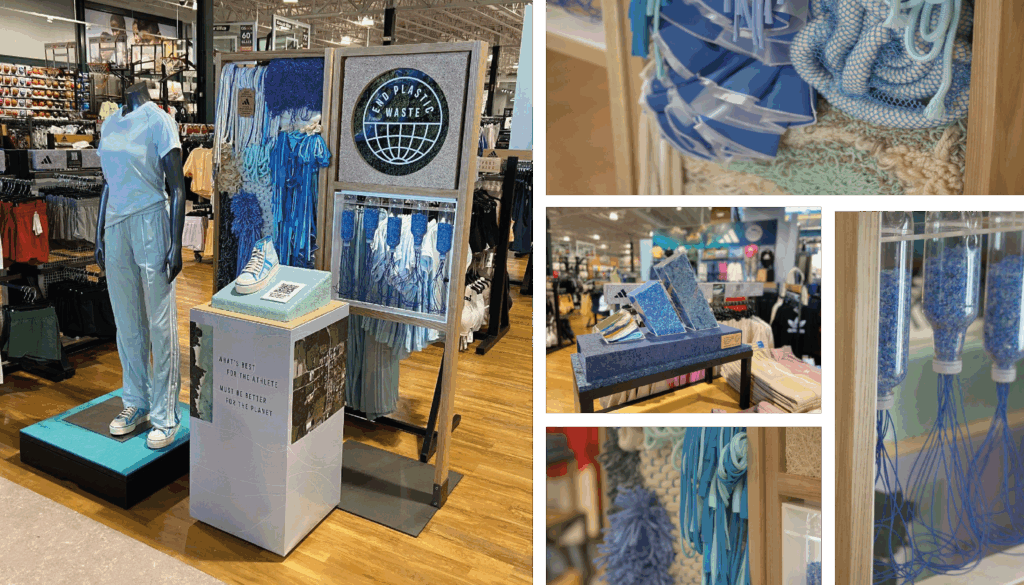
TBG, adidas, and Dick’s Sporting Goods (DSG) partnered on a “sustainable retail storytelling” campaign for adidas’s “End Plastic Waste” initiative, employing a circular design.
Sustainable Materials Used:
- Recycled: Cotton sheet goods, PET felts (Parley Ocean Plastic).
- Responsible/Recyclable: FSC®/reclaimed woods, infinitely recyclable aluminum graphics (replacing PVC).
- Regenerative/Biodegradable: Grown Mycelium Displays (mushroom root/agricultural waste).
The project embodied adidas’s Three-Loop Strategy: Recycled (PET/cotton), Circular (Aluminum), and Regenerative (Mycelium). These DSG “House of Sport” installations educated consumers on eco-conscious materials.
See More Sustainable Activations with TBG
Hint: Take a behind-the-scenes dive into the execution of this TBG x adidas End Plastic Waste display. You can see the full partnership come to life in our YouTube video.
- Drunk Elephant in Sephora
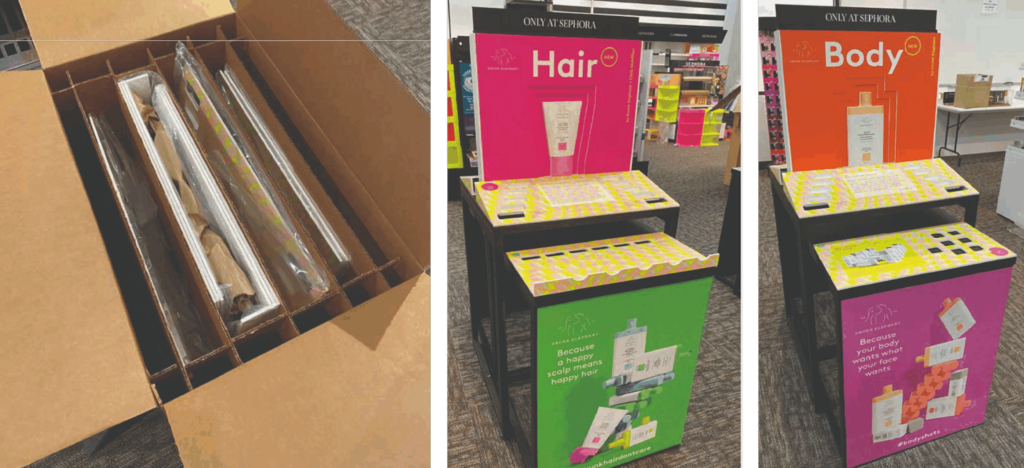
TBG partnered with Drunk Elephant and Sephora to create high-impact, sustainable retail displays. The challenge was balancing Drunk Elephant’s vibrant aesthetic with rigorous sustainability. TBG’s solution implemented a sustainable lifecycle, including 100% plastic-free (corrugate/kraft) shipping and an End-of-Life (EOL) Return Program using prepaid boxes to reclaim difficult-to-recycle materials like Styrene and EPVC. This closed-loop system achieved a 70% return rate for complex plastics, proving luxury retail can be both visually disruptive and ecologically responsible.
What We Did for Drunk Elephant
- Patagonia in DSG
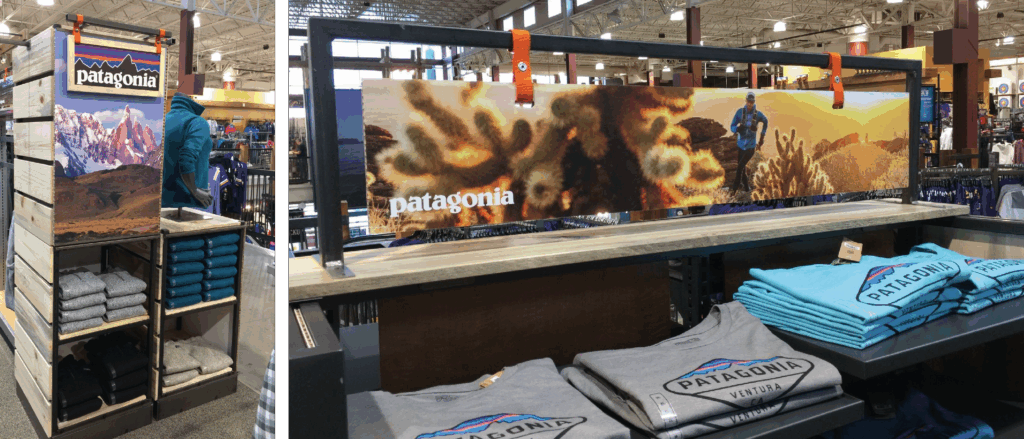
Partnering with TBG, Patagonia swiftly rolled out durable, circular-material retail fixtures in 300 stores nationwide within two months. The strategy utilized “waste as a resource,” featuring salvaged Blue Beetle Kill Pine (diverting wildfire fuel and using its indigo stain), Cold-Rolled Steel, eco-conscious water-based finishes, and 100% recyclable paper-based graphics instead of plastic. TBG’s vertical integration accelerated the timeline while upholding Patagonia’s “Earth-first” commitment.
Let’s Design the Future Together
Utilizing sustainable retail substrates is a long-term journey, requiring commitment over time. We can provide the necessary resources, whether your goal is to meet California’s regulations or to establish your company as an industry leader in places like Minnesota.