Welcome to our living reserve of the trends shaping visual merchandising and branded experiences in 2026. In an era where “viral” lasts a week and “innovation” happens overnight, keeping track of the noise is a full-time job. We’ve done the heavy lifting for you.
Every month, we update this blog with the key shifts in technology, consumer sentiment, and market data.
Displays shown are for reference only and were not produced by The Bernard Group. The Bernard Group has the capabilities to create these displays and more.

January Visual Merchandising Trends
Current retail trends emphasize the creation of warmer, more engaging environments, often through the application of design principles such as Neo-Chromatic Minimalism, Sculptural Storytelling, Augmented Reality (AR) Wayfinding, and Crafted Materiality.
Neo-Chromatic Minimalism
The focus is shifting towards sophisticated color schemes, featuring muted pastels alongside vibrant accent colors that are used sparingly for a subtle “pop.” Retail spaces are evolving past extreme minimalism, embracing a warmer, more inviting look designed to convey a sense of calm and optimism.
- Windows: Single impactful accent color against neutral surfaces
- Props & Textures: Matte finishes paired with one glossy element
- Lighting: Soft, diffused washes with spotlighted color pops
Sculptural Storytelling
The current trend favors art-inspired fixtures and organic, sculptural forms. Retail displays are transforming into small, asymmetrical, and tactile installations, moving beyond transactional presentations to create experiences for customers. These sculptural elements are key to anchoring the narrative and encouraging exploration within the space.
- Feature Walls: 3D elements that double as photo-op backdrops
- Pedestals & Props: Curved or abstract shapes vs block cubes
- Materials: Molded composites, mixed materials
Augmented Reality (AR) Wayfinding
Augmented Reality (AR) is seeing a surge in sophisticated, scalable, and functional applications, moving beyond novelty. Key integrations (such as product finders, style inspiration, and social sharing features) are bridging the gap between digital and in-store shopping experiences. This evolution significantly lowers the hurdle for product discovery and boosts customer engagement.
- Interactive Stations: Scan a marker to see collection stories or matching sets
- Virtual Styling: AR overlays on mannequin tableaux
- QR Lenses: Instant social filters tied to display themes
Crafted Materiality
Embrace Handmade Feels! This trend highlights artisanal materials, mixed media, and repurposed elements, celebrating wabi-sabi imperfections. It brings a sense of warmth and perceived authenticity to products, particularly as consumers increasingly question mass production.
- Props: Paper, leather, textiles, metal
- Fabrics: Leather over techno synthetics, metals
February Visual Merchandising Trends
CEW State of the Industry 2026: Beauty at a Crossroads & Digital Acceleration

Nicole Tribble, Principal Designer at TBG, spent the day with CEW, NielsenIQ, Pinterest and Circana to see where the beauty industry is headed. Here is your 2026 survival guide:
Market Outlook: The Economic Crossroads
Speakers: BCG (Perry Edelstein, Pierre Duprelle)
- The Context: We are in a “K-shaped” economy. Inflation is down, but prices remain structurally high.
- The Split:
- Luxury/Prestige: Winning. High-income earners are insulated and spending.
- Mass Market: Challenged. Low-income consumers are pulling back or being highly selective.
- Retail Shift: Traditional paths are blurring. Amazon is growing; retailers like Target/Walmart are leaning harder into beauty.
- Key Insight: “Winning is about navigating category dynamics… avoiding Amazon is [no longer a viable strategy], be present where consumers are going.”
Trends: “Trendsetting with Intention”
Speaker: Pinterest (Tabitha Hogan)
- Signal: High-intent planning (saves/boards) predicts trends better than views.
- 2026 Color Palette:
- Top trend:Cool Blue, Icy, sleek, futuristic.
- Others: Jade, Plum Noir, Wasabi, Persimmon.
- Aesthetic: “The Opera Aesthetic” (Maximalism, burgundy, pearls, drama).
- Gen Z: They plan a new aesthetic every 12 seconds on Pinterest.
- “Over the past 6 years, 88% of Pinterest predicts trends have come true”
Tech: The Future of Discovery (AI & Social)
Speaker: Iced Media (Leslie Ann Hall)
- The Shift: We are entering the “Zero Click Era.” Consumers will check out inside the AI chat window (e.g., via Shopify integration in ChatGPT).
- How to Rank in AI: LLMs cite 8–23 sources. You must be present on:
- Reddit (The #1 cited source).
- YouTube, Byrdie, Allure.
- New Ad Formats: YouTube Shorts Stickers, Reddit Free-Form Ads, TikTok Shoppable Photos.
Global Data: State of Global Beauty 2026
Speaker: NielsenIQ (Tara James Taylor)
- Growth: Global beauty up 10%.
- Channel Dynamics:
- TikTok Shop: Now the #2 e-commerce merchant in the UK; #6 in the US.
- Amazon: Still dominant.
- Drugstores: Currently the softest channel; needs a rebound.
- Neuroscience in Ads: Brain scans show consumers respond best to:
- Simplicity.
- Realistic usage (mirroring).
- Authenticity (real people, close-ups).
- Avoid: Negativity and too many fast cuts.
Social Commerce: The UGC Flywheel & TikTok
Speakers: Skeepers (Anna Araman) & Charm.io (Alex Nissanzan)
- UGC Strategy: Use UGC(user generated content) for SEO (text reviews) and PDPs (product detail pages), not just social.
- TikTok Halo: TikTok Shop is an awareness engine.
- Stat: A TikTok sales spike drives a 65% lift in Amazon search demand.
- Success Criteria: Products must be Demo-able (easy to show value visually) and have Fulfillment Elasticity (don’t run out of stock).
US Market Deep Dive: From Resilience to Radiance
Speaker: Circana (Larissa Jensen)
- “Sun Shower” Economy: Stormy macroeconomics, but beauty is the sunshine.
- GLP-1 Impact: A massive new variable.
- GLP-1 users spend more on beauty (prestige skincare, hair thinning products, and fragrance to replace food dopamine).
- Category Winners:
- Fragrance: Stabilizing but huge gift category.
- Hair: Hair loss/growth products are booming.
- Supplements: Creatine, Magnesium, and “Greens” (Inside-out beauty).
- Top Launch Examples:
- Prestige: Chanel (Splendide), Prada (Paradigm).
- Mass: L’Oreal Paris, EOS (Cashmere Vanilla), Maybelline (Mascara)
March Visual Merchandising Trends
Part 2 CEW State of the Industry 2026:
Pinterest PredictsTM 2026
Nicole, our Principal Designer here at The Bernard Group, recently attended the CEW State of the Industry 2026 presentation of Pinterest Predicts 2026.
It was an incredible opportunity to connect with fellow industry professionals and get a first look at the transformative trends set to dominate the market. As the retail landscape continues to evolve into a “K-shaped” economy where prestige and mass market dynamics blur, staying ahead of consumer intention is more critical than ever.
The upcoming year is defined by a shift away from minimalism toward maximalism, tactile textures, and high-contrast cultural fusions. For TBG, this translates to complex fabrication needs involving diverse materials like red marble, chrome, lace, and rubberized finishes.
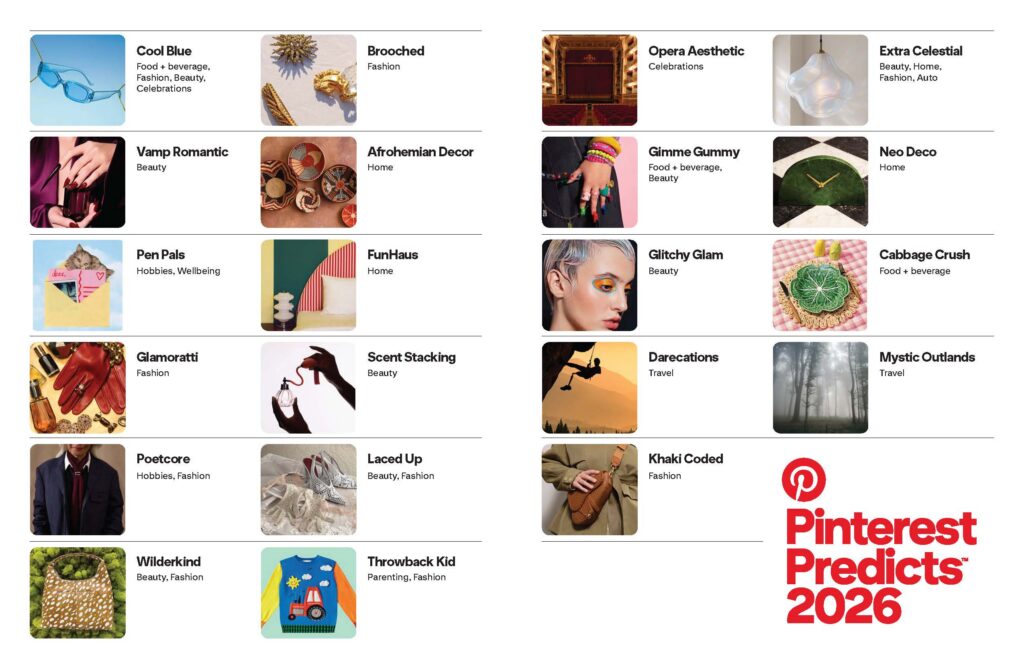
Here are a few high-velocity trends Nicole identified that will redefine Visual Merchandising (VM) and experiential retail this year:
1. High-Impact Fabrication & Interior Trends
- Neo Deco (+100% for antique bar carts): A modern, sleek take on Art Deco using chrome, brass, and geometric hits like chevrons and fan arches.
- Afrohemian Decor (+220% for afrobohemian home decor): A fusion of African and bohemian styles requiring colorful textiles, Ethiopian-inspired wall art, and handwoven textures.
- Fun Haus (+130% for circus interior): An elevated “camp” aesthetic featuring bold stripes, sculptural silhouettes, and “clownish charm”.
2. Maximalist Fashion & Visual Merchandising
- Glamoratti (+225% for 80s luxury): A return to “decadence” through sculpted shoulders, tailored silhouettes, and chunky gold accents.
- Laced Up (+215% for lace nails): Unexpected elegance using doilies, lace collars, and crochet textures across diverse product categories.
- Khaki Coded (+100% for brown linen shirts): A “paleontologist” and adventure-ready aesthetic featuring utility-focused designs with multiple pockets.
3. Immersive Beauty & Sensory Environments
- Scent Stacking (+500% for niche perfume collections): Focuses on bespoke fragrance formulas and layered luxury, ideal for interactive sensory displays.
- Gimme Gummy (+130% for jelly blush): A tactile obsession with rubberized finishes, 3D jewelry, and bendy materials.
- Vamp Romantic (+180% for gothic coffin nails): An “after-dark” glamour utilizing jet black, romantic goth hair, and smudged kohl.
4. Experiential Travel & Event Themes
- Mystic Outlands (+465% for Scotland highlands aesthetic): Creating “fairytale meets fever dream” environments with mist, distant ruins, and enchanting forest motifs.
- Opera Aesthetic (+95% for midnight masquerade): Dramatic gathering spaces using heavy drapery, dark cabaret vibes, and red roses.
How TBG Can Support the 2026 Vision
As brands look to move these digital trends into the physical world, TBG is positioned to execute the following:
- Complex Material Sourcing: Sourcing the specific textures—from chrome and brass to rubberized “gummy” finishes—required to make these trends authentic.
- Custom Fabrication: Building the sculptural silhouettes of “Fun Haus” or the oversized, tailored structures of “Glamoratti”.
- Sensory Activations: Designing environments that allow for “Scent Stacking” and tactile engagement with “Gimme Gummy” products.
Legal Disclaimer: Pinterest Predicts 2026
General Information Purpose Only The information provided in this presentation, including trend forecasts and search volume growth percentages, is for informational and planning purposes only. While these predictions are based on Pinterest’s analysis of global internal search data, they are projections of future behavior and do not guarantee specific commercial outcomes or market performance.
Data Sourcing and Methodology All search data and growth percentages are sourced from Pinterest internal data, specifically English-language global searches. The analysis period covers September 2023 to August 2025, comparing normalized search volumes against the previous period (September 2022 to August 2024) to calculate growth trends.
Demographic and Generational Data
Trend “Early Adopters” and demographic insights are defined by specific age ranges as of 2026:
- Gen Z: Ages 18–27.
- Millennials: Ages 28–43.
- Gen X: Ages 44–59.
- Baby Boomers: Ages 60+.
Advertising and Compliance Pinterest’s Advertising Guidelines prohibit the targeting of any audience based on sensitive categories, including gender identity, race, ethnicity, or religious beliefs. Users of this data are responsible for ensuring that any resulting marketing or business strategies comply with local advertising laws and platform-specific policies.
Third-Party Execution
Any reference to third-party execution partners, such as TBG (The Bernard Group), is for service recommendation purposes. Execution of these trends through third-party vendors is subject to separate contractual agreements between the respective parties.
April Visual Merchandising Trends
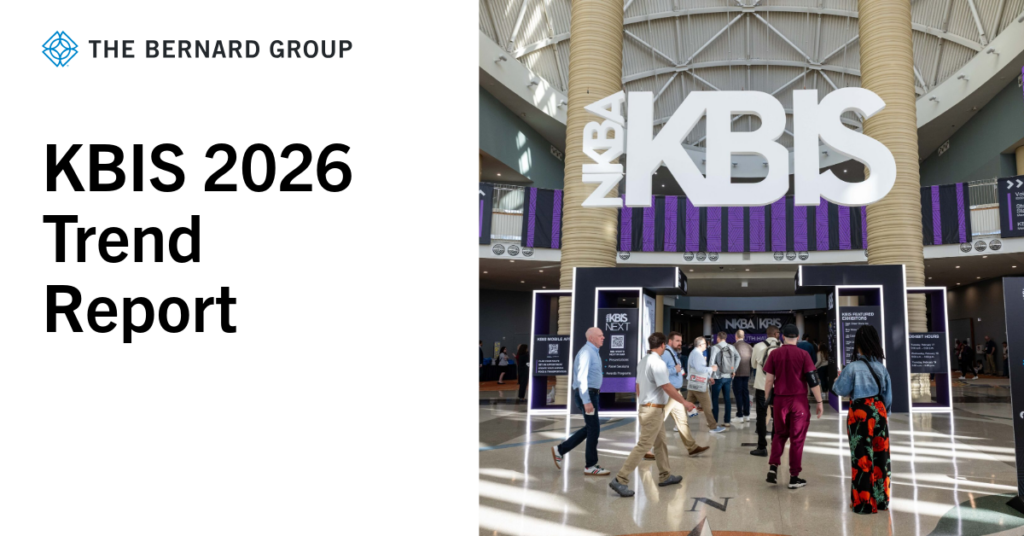
Innovation on Tap: Our Highlights from KBIS 2026
It’s one thing to read about the future of home design; it’s another to walk through 1,150,000+ net square feet of it. This February, members of The Bernard Group team—including principal designer Nicole Tribble, designer Alex Marble and account manager Chuck Vacha—headed to Orlando, Florida, for KBIS 2026.The energy this year was electric, and for good reason: the event attracted a record-breaking crowd of over 117,000 industry professionals and featured more than 2,250 exhibitors. From smart-home integration to stunning new finishes, here is what caught our eye on the show floor.
Kohler: The Ultimate “House Party”
Kohler was undeniably the star of the show this year. Their “Welcome to Our Kohler House Party” theme wasn’t just a booth; it was an immersive experience that stood head and shoulders above the rest.
- The Dekoda Experience: One of the most talked-about innovations was the Kohler Dekoda Integrated Health Experience & App, a “Best of KBIS” finalist. This smart toilet device and app are designed to take health personally, tracking habits to help users find a “sharper focus”.
- Next-Level Materials: The booth showcased incredible build-outs, including the use of back-lit PETG and impressive shower displays that felt more like water fountains.
- Wellness Tech: Beyond the bathroom, they leaned heavily into the “Livable Luxe” trend with full-scale saunas and integrated health technology.
Moen: Bold Colors and Big Screens
Moen made a massive statement with their unconventional and impressive full-scale video wall. They weren’t afraid to play with aesthetics, showcasing unique color combinations and their Sleek™ Collection of fixtures. The brand successfully blended high-tech visuals with high-end design, proving that the future of the kitchen and bath is anything but monochromatic.
Cosentino: High-End Hospitality
The Cosentino space was a masterclass in luxury. Their high-end marble build-out was a “Best of KBIS” standout, highlighting the beauty of innovative surfaces. To make the experience even better, they hosted a lovely coffee bar, creating a space that felt as much like a boutique hotel lounge as an exhibition.
Toto: Transparent Technology
Ever wonder how a high-efficiency toilet actually works? Toto provided the answer with their clear fixtures. By using see-through tubs and toilets, they were able to show off the internal technology and engineering that usually stays hidden behind porcelain. It was a fascinating, “tech-forward” approach to essential home hardware.
Final Thoughts from the Floor
KBIS 2026 was a massive, impressive opportunity to see how the industry is evolving. Whether it was KitchenAid’s new oven cameras with food recognition or Kohler’s New Dekoda Health Experience and App, the focus was clear: technology should make life uncomplicated.
We’re returning to the office with a wealth of new materials, finishes, and ideas to share with our clients. The kitchen and bath industry is moving toward a more personalized, tech-integrated, and “livable luxe” future, and we can’t wait to see these trends come to life in our upcoming projects.
What do you think is the most exciting “smart home” feature—would you use an app to track your bathroom health habits?
June Visual Merchandising Trends
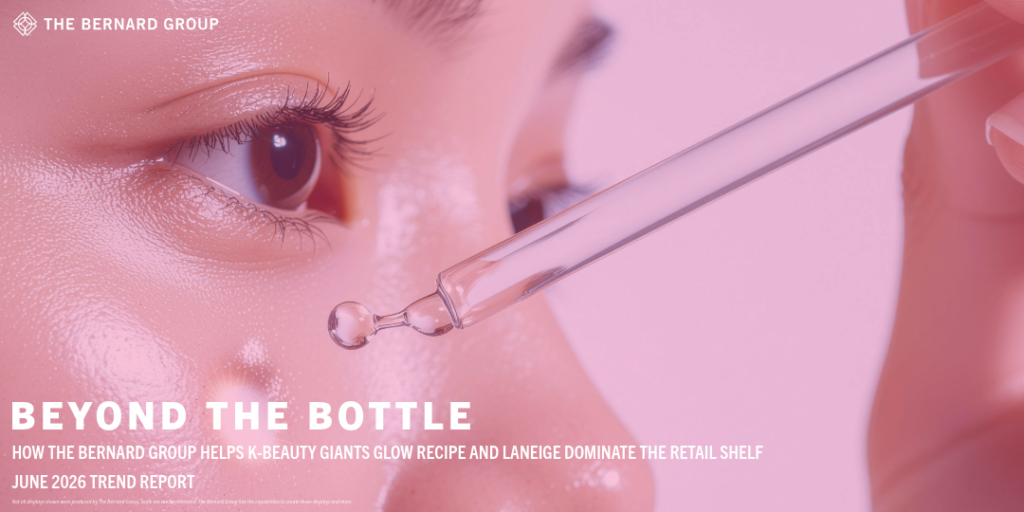
Beyond the Bottle: How TBG Helps K-Beauty Giants Glow Recipe and Laneige Dominate the Retail Shelf
The rise of Korean Beauty (K-Beauty) is no longer a trend—it is a dominant force shaping the global skincare and cosmetics landscape. Driven by groundbreaking product textures, skin-first formulations, and highly recognizable aesthetics, K-Beauty brands have captured the hearts and routines of consumers worldwide.
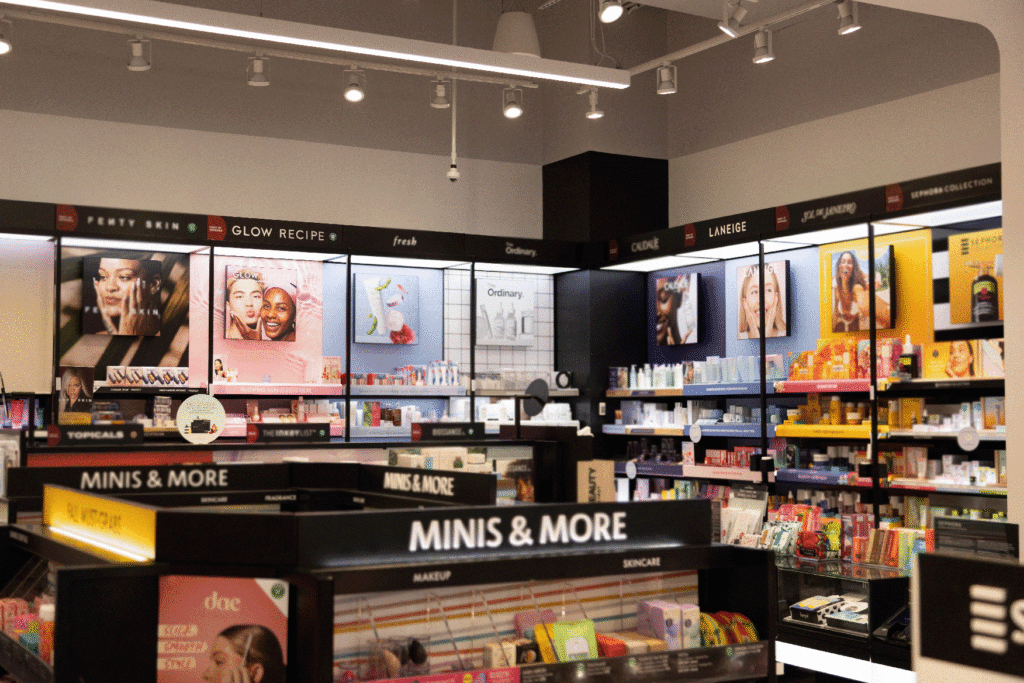
But in a saturated retail environment, a revolutionary formula isn’t enough. To command attention on the shelves of beauty retailers like Sephora, brands must create a sensory connection before a consumer ever samples the product. That’s where the art of premium, creative display and high-fidelity printing comes in.
At TBG, we have had the privilege of working alongside two of the industry’s most prominent trailblazers: Glow Recipe and Laneige. Here is a look at how we translate their digital-first, ultra-dewy aesthetics into tangible, high-impact retail experiences.
Capturing Vibrant Color with Glow Recipe
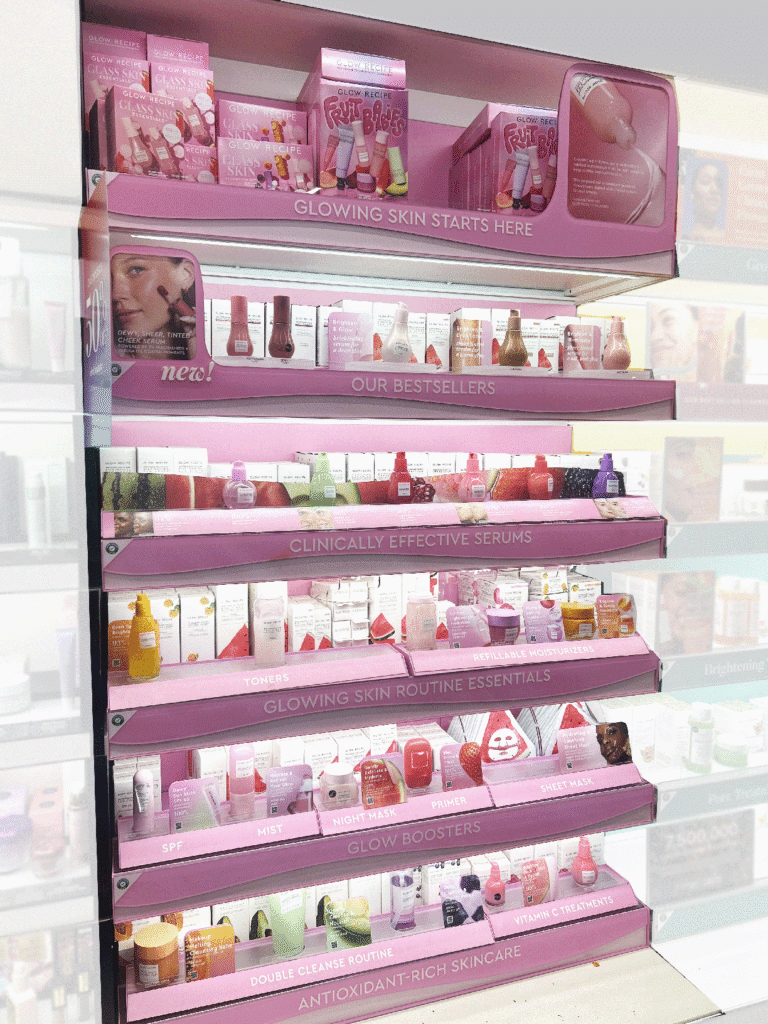
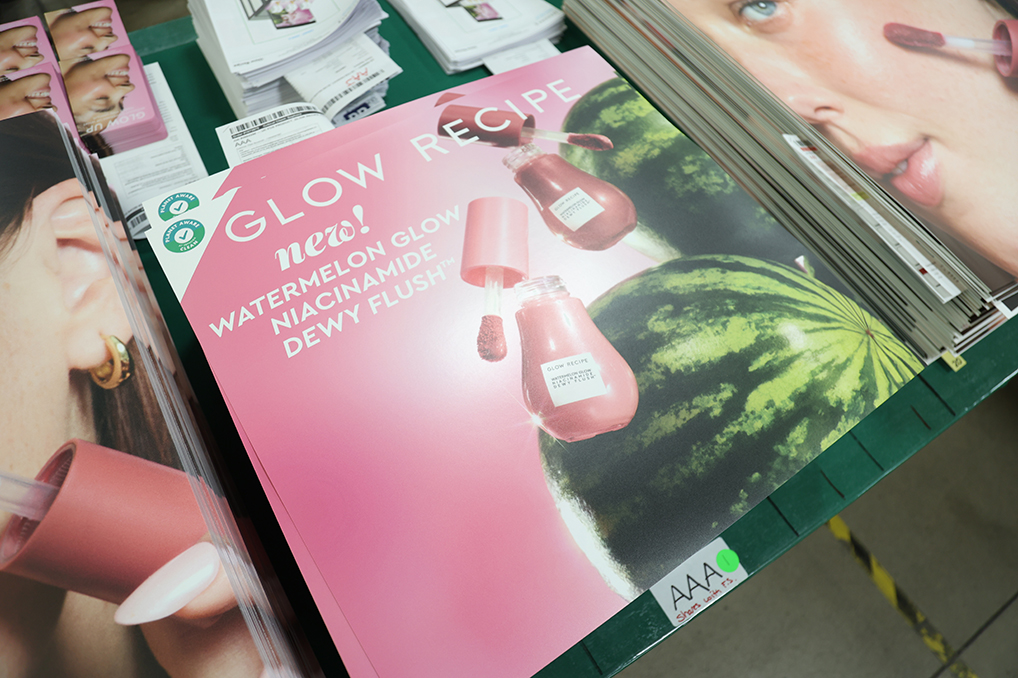
Glow Recipe is world-renowned for its fruit-forward formulas and instantly recognizable, playful packaging. When launching an exciting product like the Watermelon Glow Niacinamide Dewy Flush™, the printed retail assets must match the exact energy and color saturation of the brand’s identity.
In the production shot, you can see TBG’s printing precision in action. Achieving the smooth gradient of hyper-pigmented pinks, the crispness of the typography, and the realistic texturing of the watermelons requires advanced color management and state-of-the-art machinery. When these assets land in-store, they don’t just sit on a shelf—they pop, inviting consumers to experience the brand’s signature juicy aesthetic.

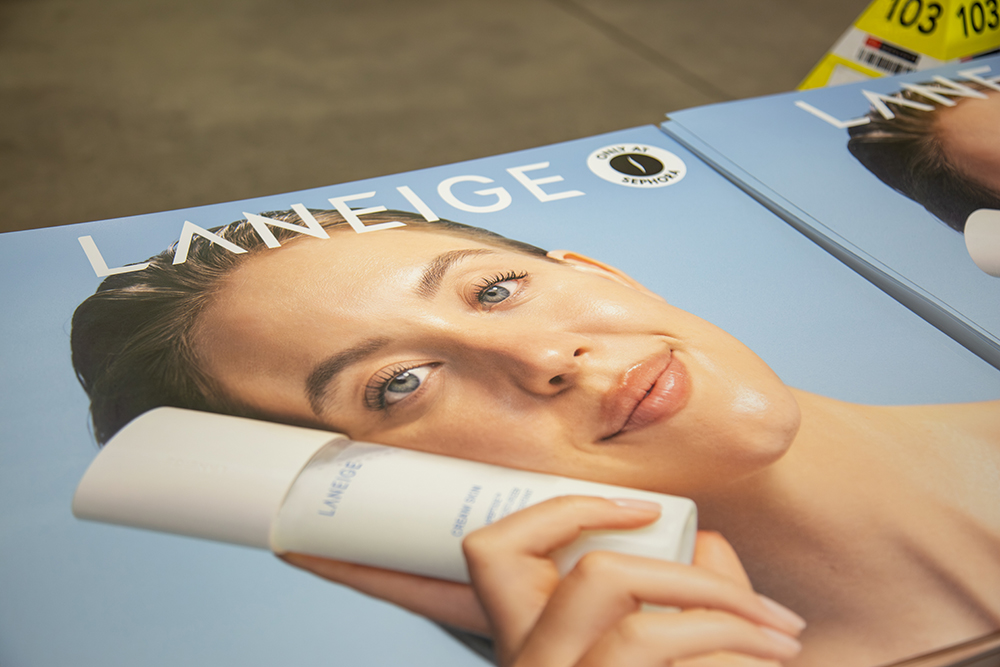
While Glow Recipe leans into vibrant playfulness, Laneige is synonymous with sophisticated, deeply hydrating skincare science. Their iconic Cream Skin line demands a visual presentation that communicates purity, flawless skin texture, and deep moisture.
When printing large-scale retail displays featuring human skin tones, there is zero room for error. TBG focuses heavily on detail and intricacy. Our high-resolution printing captures every subtle highlight and shade, perfectly rendering the “glass skin” look that Laneige is famous for without pixelation or color distortion. The resulting imagery feels aspirational, clean, and premium.
The TBG Advantage: Bridging Innovation and Execution
As K-Beauty brands continue to scale and innovate, their physical retail presence must move at the same speed. TBG provides the end-to-end printing, fabrication, and fulfillment expertise required to turn complex creative visions into seamless retail realities.
From custom endcaps and window displays to high-volume campaign graphics, we ensure that what you see on a digital screen is perfectly replicated on the retail floor.
Ready to elevate your brand’s retail presence? Contact the team at TBG today to discuss your next project.
August Visual Merchandising Trends
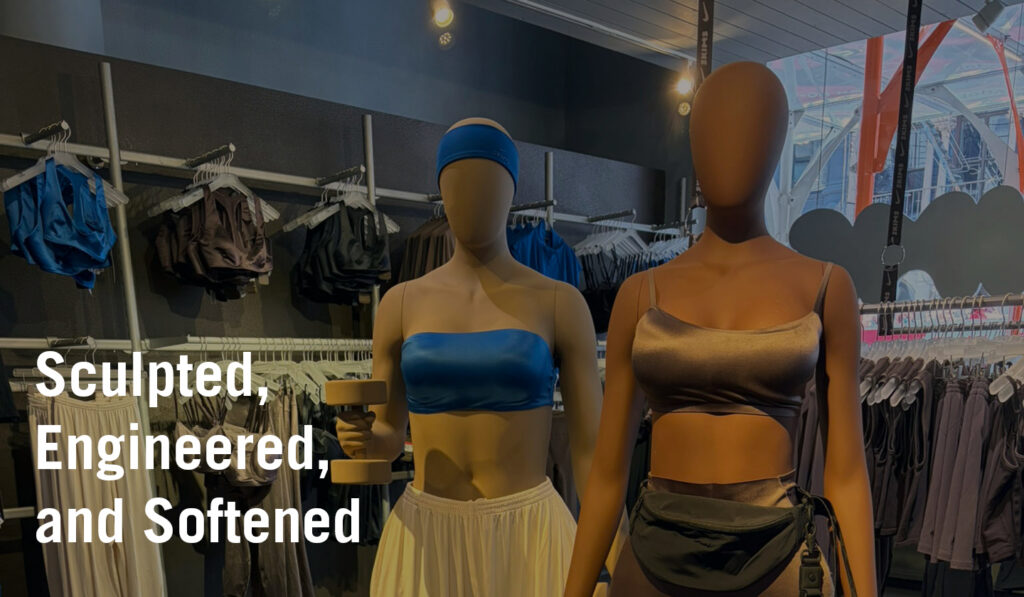
Deconstructing the New Architectural Era of Activewear Visual Merchandising
For decades, activewear visual merchandising solved a relatively simple problem using a predictable playbook: organize technical products, communicate performance, and move volume. Store environments were built around high-density wall bays, high-gloss mannequins mid-stride, neon callouts, and dense chrome racks designed to move volume rather than evoke emotion. The merchandise was technical, and the spaces were strictly utility.
The shopper has changed. So has the job of the store.
Today, that boundary has dissolved entirely. As activewear transformed into a daily uniform and physical stores evolved from transactional fulfillment hubs to brand media channels, the retail environment had to change with it.
Enter the new era of activewear visual merchandising: a space where high-performance engineering meets architectural minimalism, organic materiality, and sculpted interior design. Modern VM no longer just organizes garments; it visually validates price points, expresses brand ethos, and turns technical fabrics into tactile art.
Physical retail is a brand medium. Intentional VM turns that medium into a commercial advantage and brand love. This is the emerging playbook for visual merchandising.
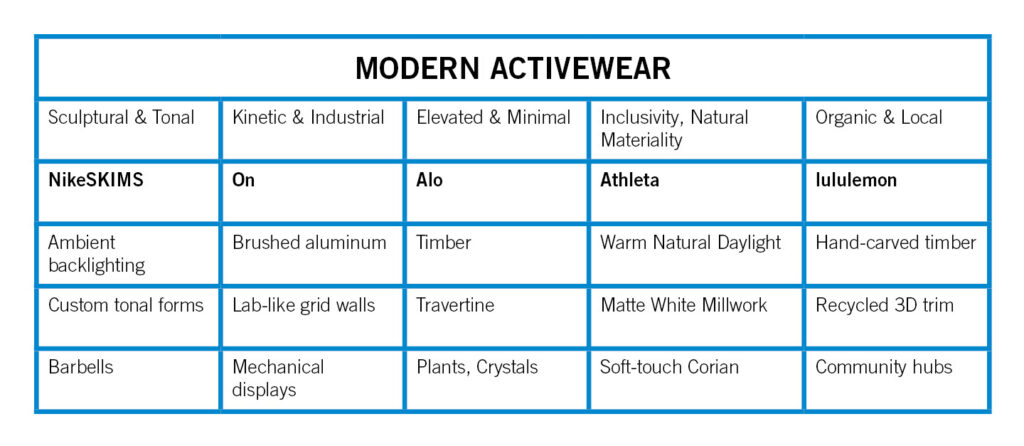
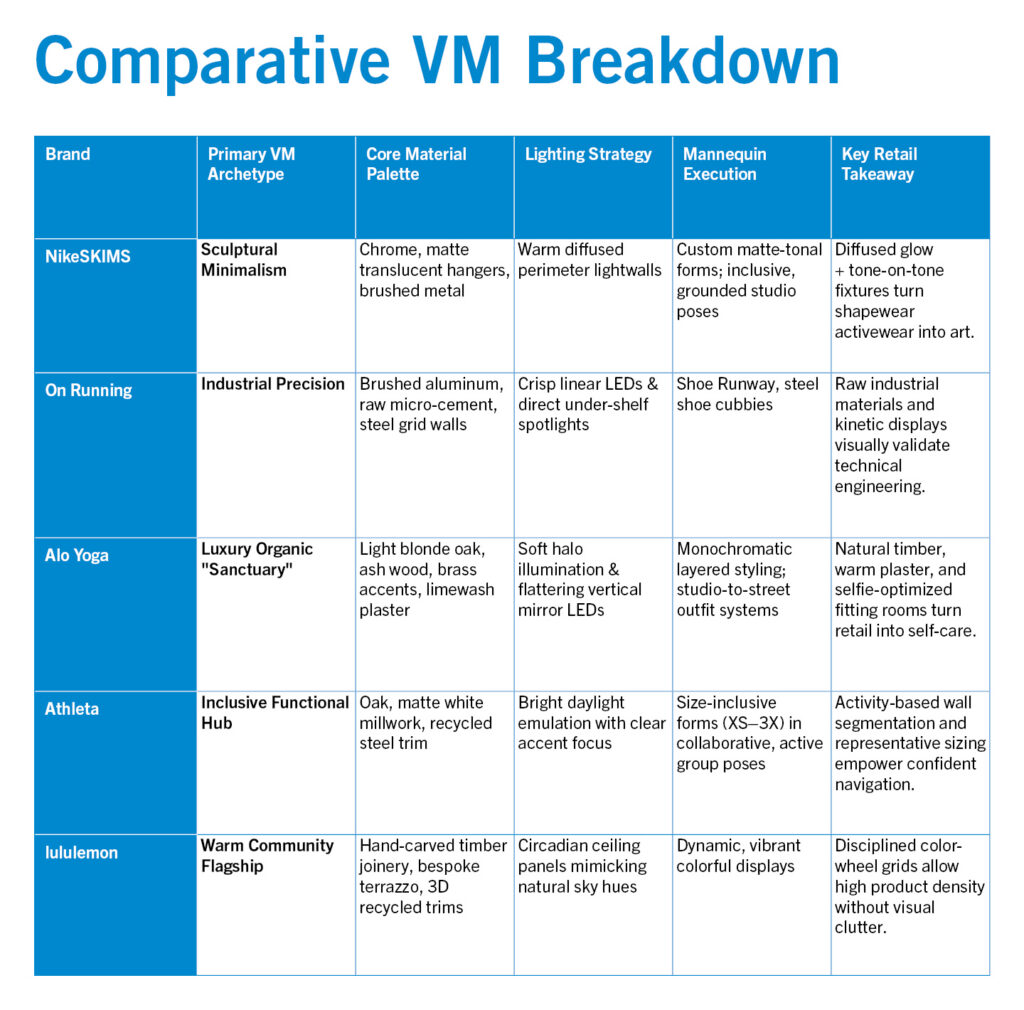
Five industry leaders exemplify this spatial evolution in vastly different ways:
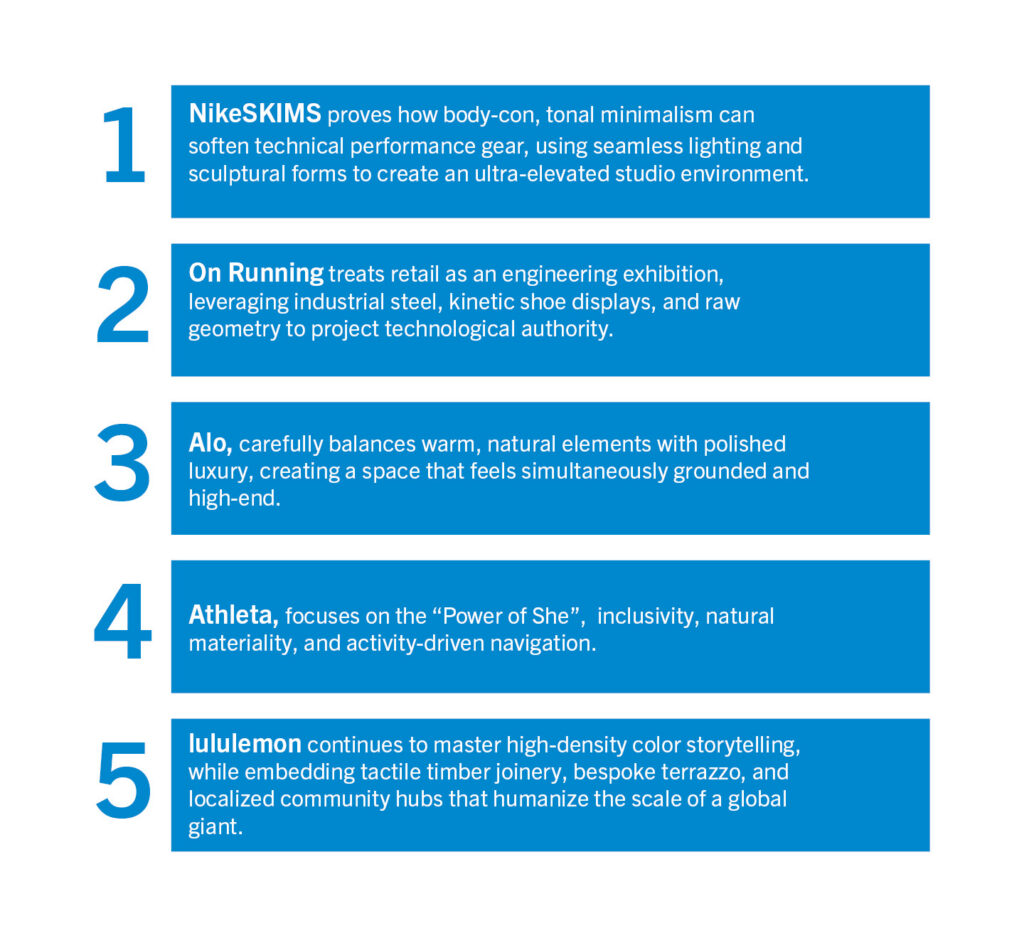
By analyzing the material palettes, lighting strategies, and spatial layouts across these powerhouse brands, we can map out the new playbook for modern visual merchandising— and uncover how physical retail continues to shape consumer perception long before the customer ever steps into the fitting room.
NikeSKIMS: The Sculptural Architecture of Body-Con Performance
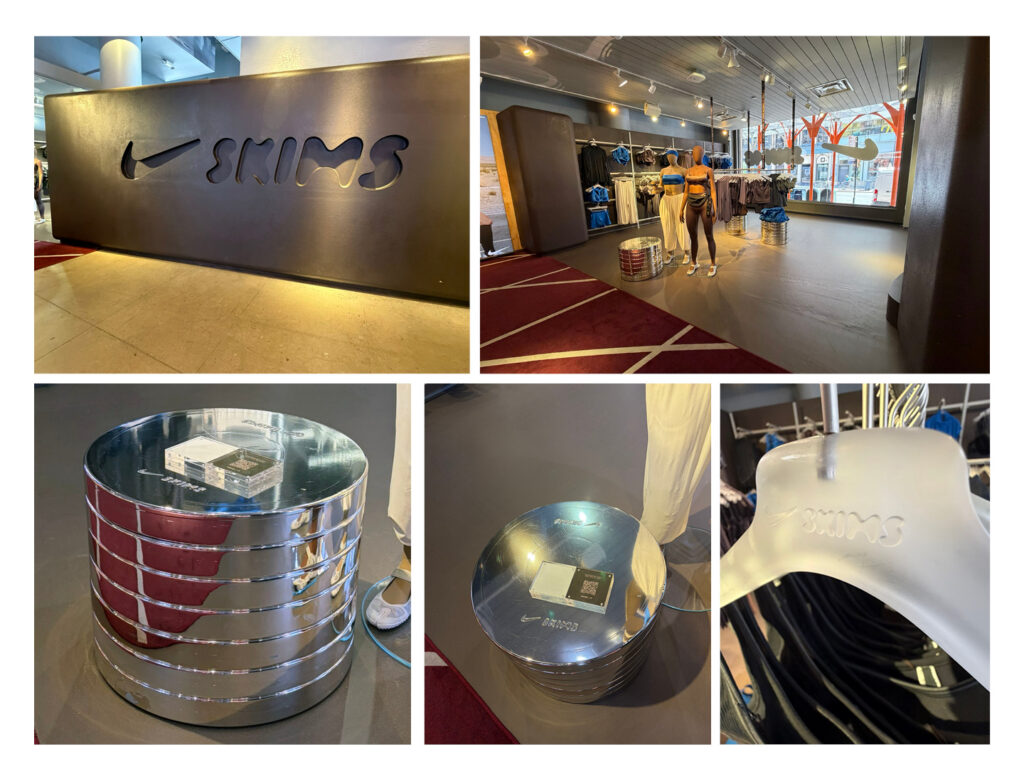
When Nike and SKIMS introduced their standalone sub-brand, the visual merchandising challenge was clear: how do you synthesize Nike’s aggressive, sports-science heritage with SKIMS’ soft-touch, body-positive intimate aesthetic?
The result in flagship spaces is a masterclass in tonal minimalism and ambient softening—; a complete rejection of the high-contrast, neon-heavy “sweatbox” retail environments of the early 2010s.
1. Diffused Lighting as the Primary Architectural Anchor
Rather than directional spotlighting that creates harsh shadows on technical activewear, NikeSKIMS retail installations rely on diffused, floor-to-ceiling glowing light walls.
- The Spatial Effect: The backlit panels make skin-tight silhouettes (like the Matte Tricot and Ribbed Seamless lines) read like gallery sculptures rather than rack inventory.
- Materiality: Soft-touch Corian display tables and custom-molded plinths replace hard, chrome-finished nesting tables.
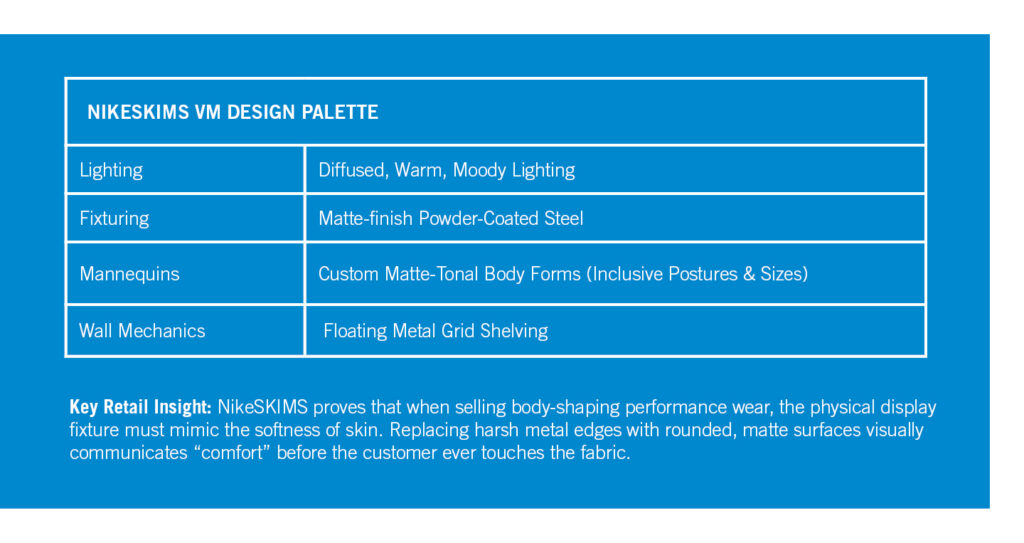
- The VM Takeaway: Highlighting compression fabrics requires diffused, warm lighting to emphasize body contouring without accentuating seam bulk.
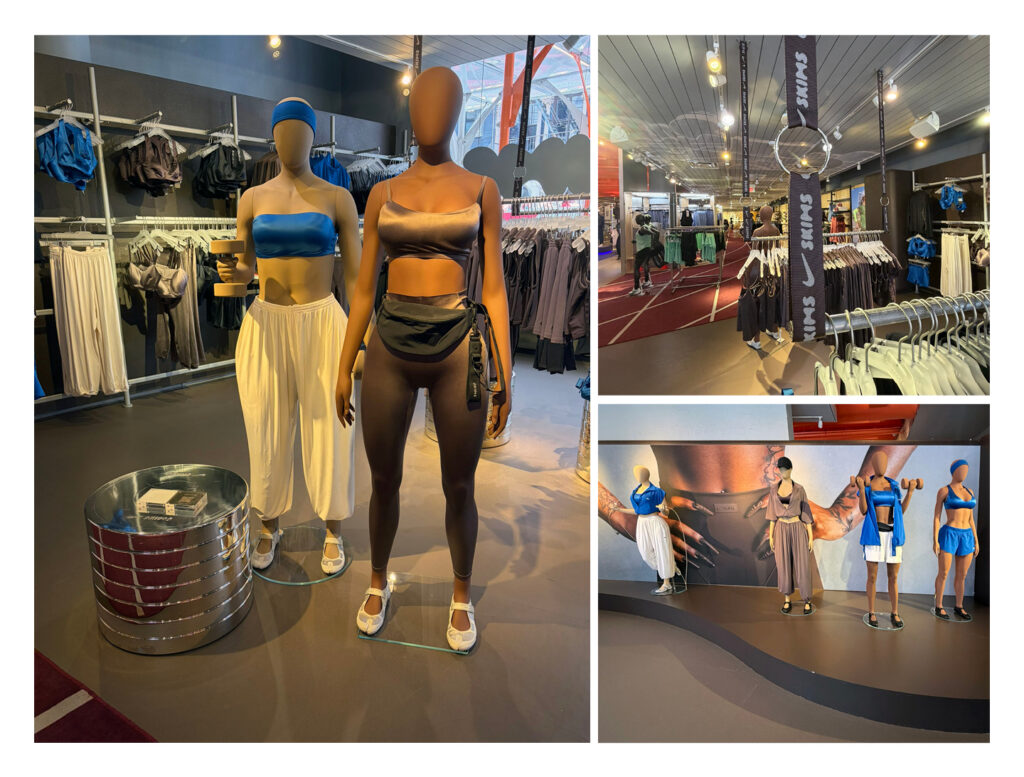
2. The Inclusive, Custom-Tonal Mannequin Strategy
Traditional activewear relies on high-gloss, ultra-athletic mannequins fixed in extreme dynamic motion (running sprints, jumping). NikeSKIMS flips this script:
- Matte Finish & Palette Alignment: Mannequins are cast in custom matte skin tones that mirror the collection’s nude, obsidian, and slate color palettes.
- Static, Grounded Postures: Formations favor grounded, yoga- or studio-adjacent postures that prioritize how the garment molds to the body rather than its movement through the air.
- Grouping Mechanics: Mannequins are arranged in close-knit “tribal” clusters, creating depth and framing head-to-toe “systems of dress” rather than isolated single items.
Key Retail Insight: NikeSKIMS proves that when selling body-shaping performance wear, the physical display fixture must mimic the softness of skin. Replacing harsh metal edges with rounded, matte surfaces visually communicates “comfort” before the customer ever touches the fabric.
3. High-Fidelity Spatial Energy
The footwear wall isn’t treated as a storage rack; it’s treated as a running track. Flooring materials frequently transition from polished concrete to recycled rubber track surfacing in active try-on zones, visually framing the product in its functional environment.
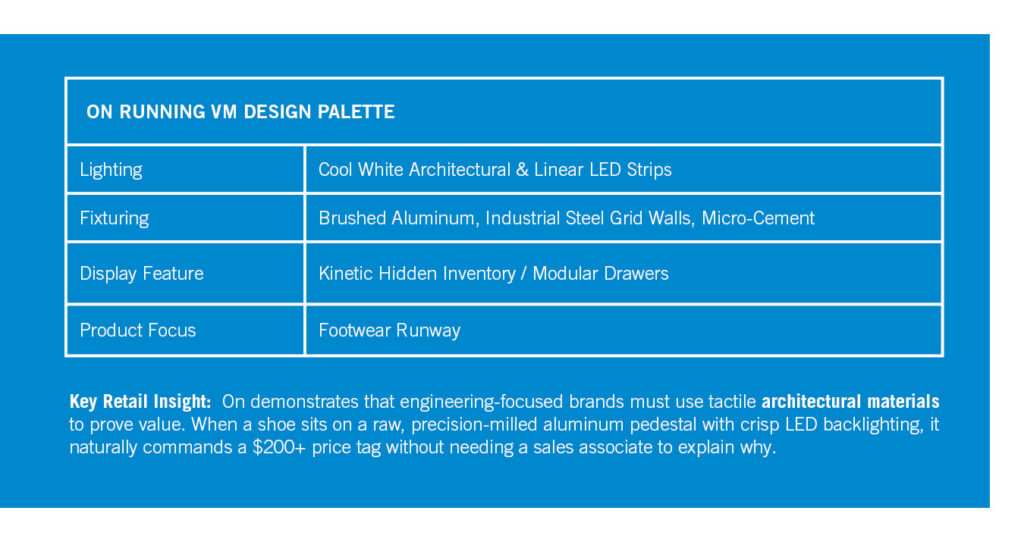
Key Retail Insight: On demonstrates that engineering-focused brands must use tactile architectural materials to prove value. When a shoe sits on a raw, precision-milled aluminum pedestal with crisp LED backlighting, it naturally commands a $200+ price tag without needing a sales associate to explain why.
On Running: Kinetic Precision & The Lab-to-Floor Aesthetic
If NikeSKIMS softens sportswear into studio art, On Running turns retail into a high-precision mechanical laboratory. The Swiss brand’s store design strategy is rooted in architectural honesty—, using raw materials and kinetic displays to visually validate their premium price point ($160–$280+ per pair).

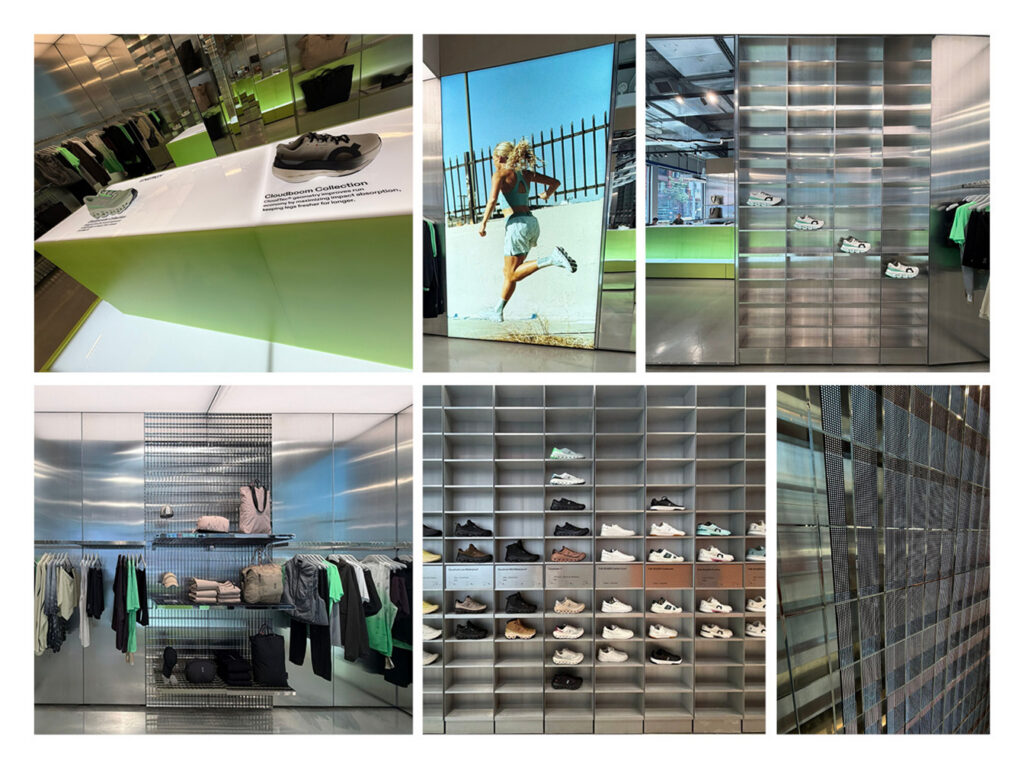
1. Architectural Proof Points over Traditional Signage
On rarely relies on printed graphic banners or callout cards to explain its CloudTec tech. Instead, the VM architecture does the heavy lifting:
- Brushed Aluminum & Micro-Cement: Walls and fixtures feature raw brushed steel, perforated aluminum panels, and poured concrete. This industrial palette subconsciously signals engineering, scientific rigor, and durability. Also clean and sustainable.
- Deconstructed Product Suspensions: Footwear displays frequently feature exploded-view models suspended by ultra-thin tension cables
—, exposing the internal speedboards, foam cushioning, and upper mesh layers in mid-air.
2. The Kinetic “Magic Wall” & Frictionless Merchandising
On’s flagship secret weapon is its proprietary wall fixture system—the Magic Wall:
- Hidden Inventory Integration: Rather than hiding backstock in a rear storeroom, On integrates modular, mechanical wall drawers directly beneath footwear displays. Visual merchandisers can pull full size runs instantly without leaving the customer or disrupting the visual line.
- Grid Alignment & Spatial Geometry: Shoes are spaced on precise modular grids with integrated LED underside channels, creating zero-clutter visual rhythm that encourages touch and interaction.
3. High-Fidelity Spatial Energy
The footwear wall isn’t treated as a storage rack; it’s treated as a running track. Flooring materials frequently transition from polished concrete to recycled rubber track surfacing in active try-on zones, visually framing the product in its functional environment.
Key Retail Insight: On demonstrates that engineering-focused brands must use tactile architectural materials to prove value. When a shoe sits on a raw, precision-milled aluminum pedestal with crisp LED backlighting, it naturally commands a $200+ price tag without needing a sales associate to explain why.
Alo Yoga: The “Sanctuary” Concept & Studio-to-Street Luxury
Where On Running leans into industrial engineering and NikeSKIMS emphasizes body-con sculpt, Alo Yoga grounds its visual merchandising in organic minimalism and high-gloss wellness. Alo intentionally refers to its physical locations not as “stores,” but as “Sanctuaries”—environments designed to blur the line between a luxury retail space, a mindfulness studio, and a social club.
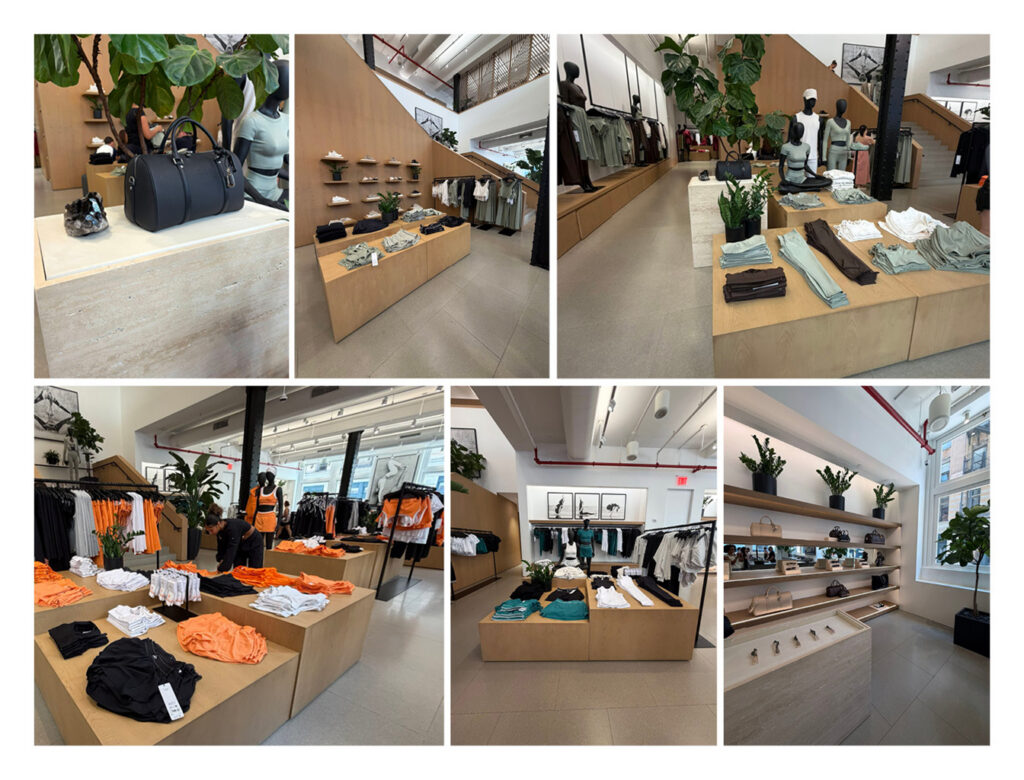
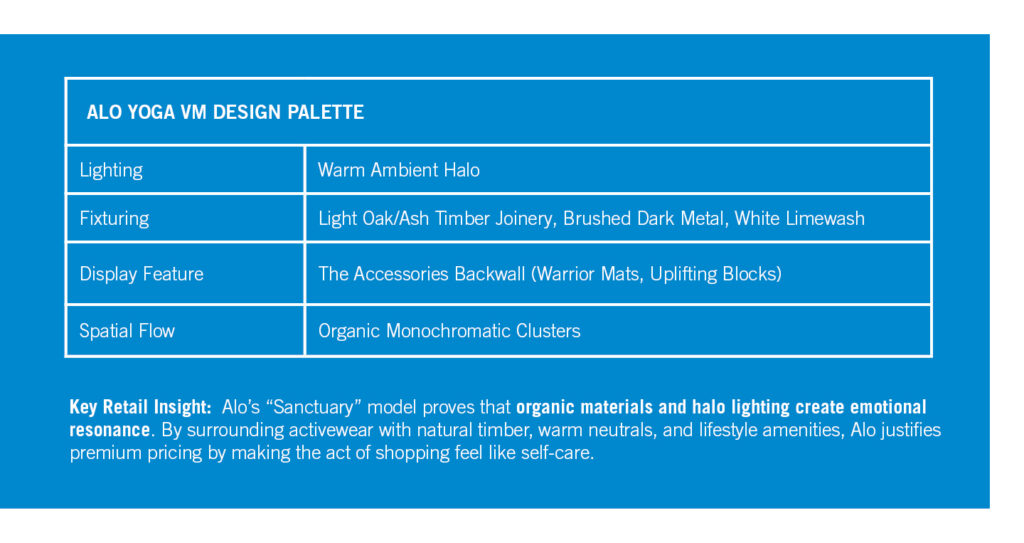
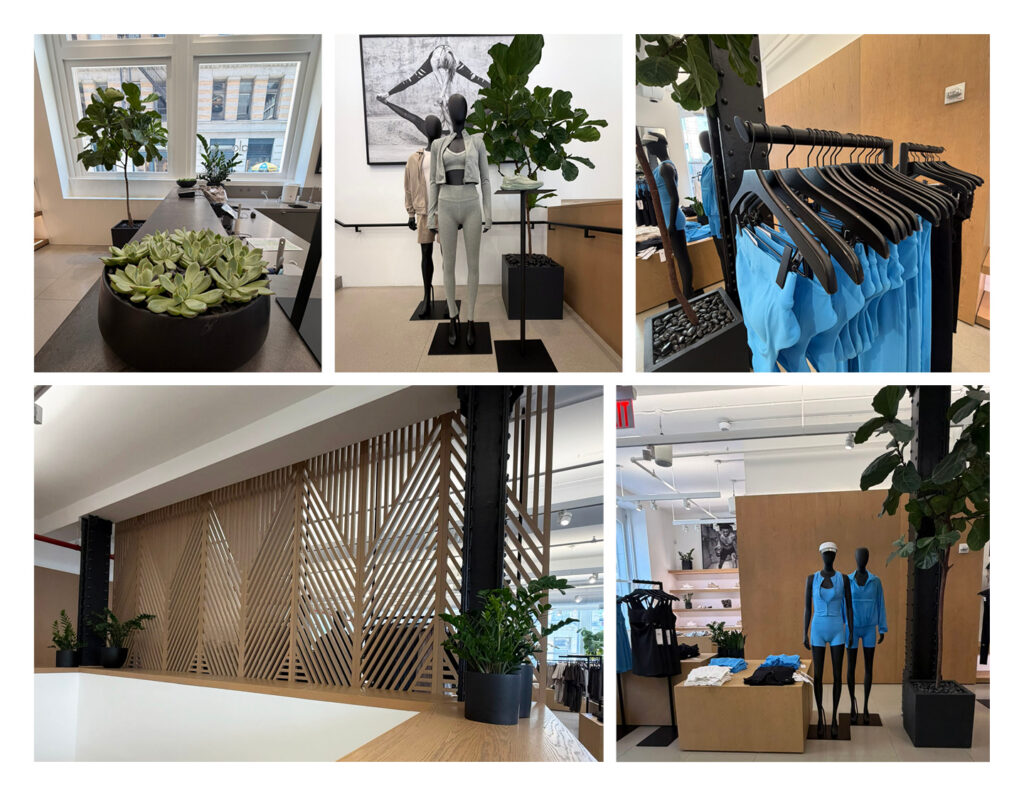
1. Organic Minimal Interiors & Spatial Flow
Alo’s visual merchandising strategy relies heavily on architectural calmness—, using natural materials to offset sleek streetwear silhouettes:
- Natural Wood & Warm Neutral Surfaces: Rather than cold metallic fixtures, key display tables, fitting room doors, and perimeter accents feature warm blonde oak, ash wood, and white limewash plaster wall textures.
- Monochromatic Color-Story Merchandising: Apparel is merchandised on the floor in strict tonal stories (e.g., Macadamia, Midnight, Espresso). Mannequins are styled with multi-layered studio-to-street outfits—pairing sports bras with oversized cashmere knits or tailored puffer jackets to communicate versatility.
2. High-Margin Accessory Focal Points
Alo excels at elevating hard goods and wellness accessories into hero visual features:
- Lifestyle Cross-Merchandising: High-margin impulse items
—–such asclaw clips, grip socks, bucket hats, and Alo Glow System skincare—– are merchandised directly alongside apparel sets using floating brass or light-timber shelving.
3. Lifestyle Anchors
Alo recognizes that modern retail environments must serve as content backdrop studios:
Key Retail Insight: Alo’s “Sanctuary” model proves that organic materials and halo lighting create emotional resonance. By surrounding activewear with natural timber, warm neutrals, and lifestyle amenities, Alo justifies premium pricing by making the act of shopping feel like self-care.
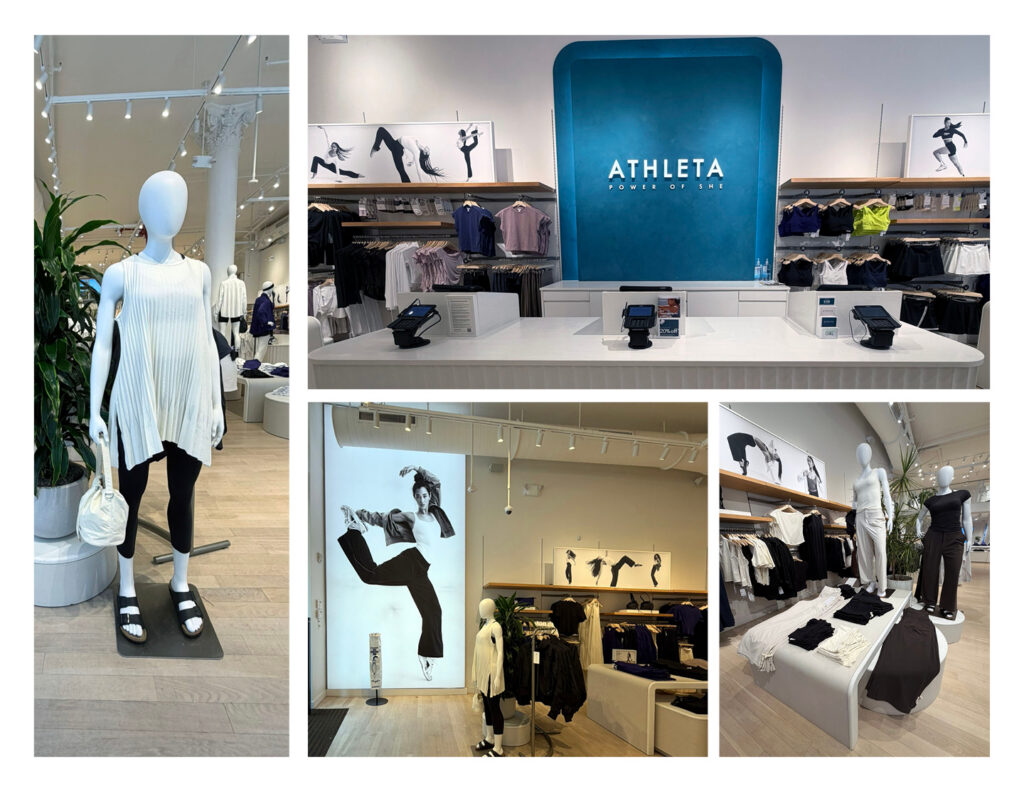
Athleta: B-Corp Sustainability & Inclusive “Power of She” Storytelling
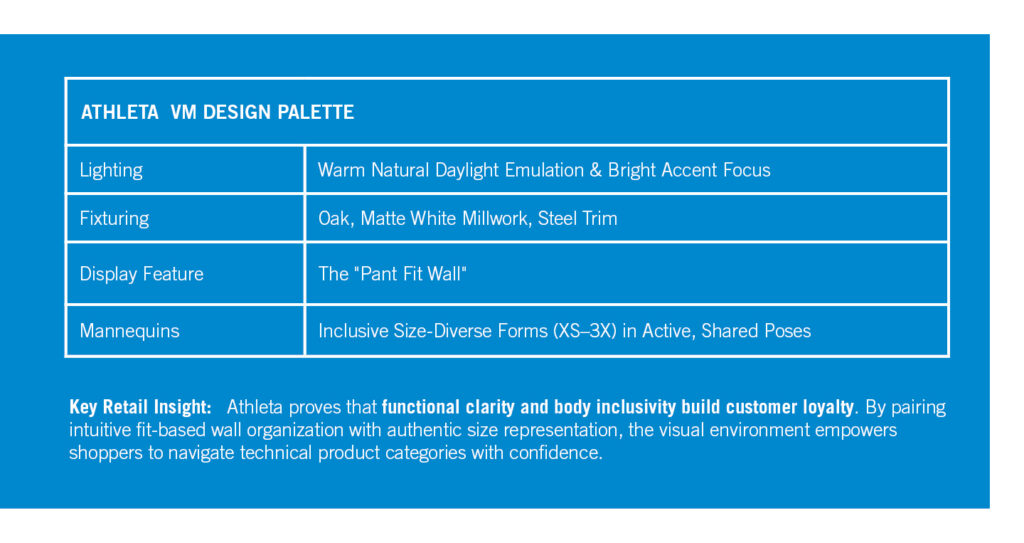
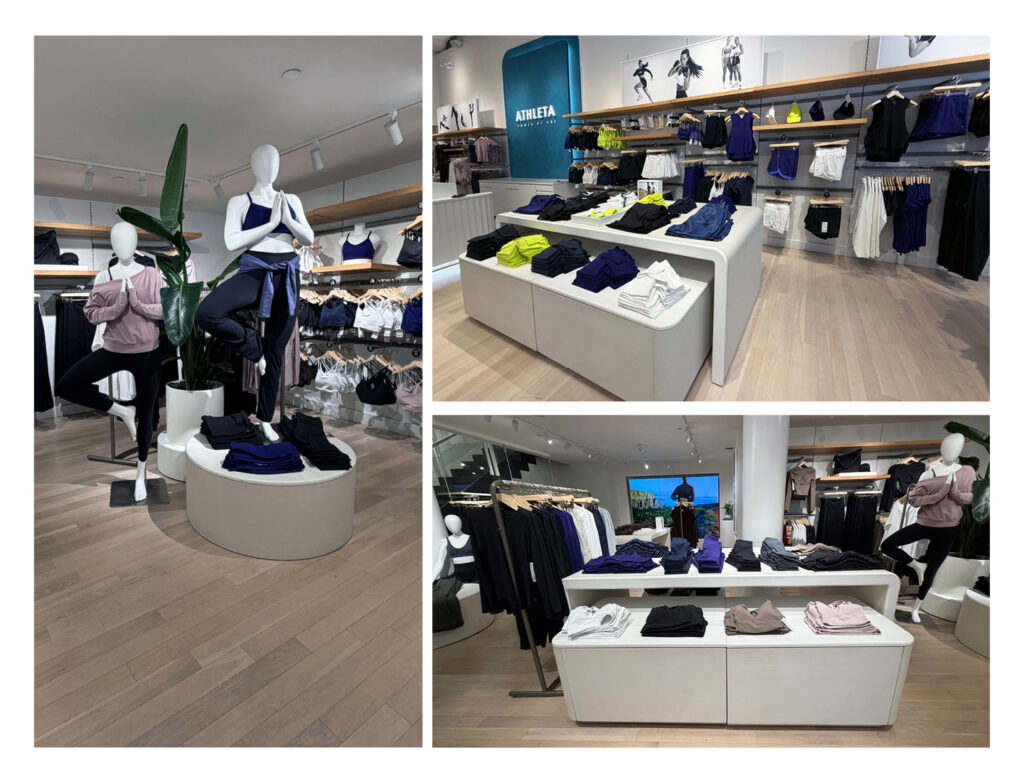
While Alo targets luxury studio wellness and On focuses on industrial performance engineering, Athleta (Gap Inc.’s Certified B Corp powerhouse) centers its visual merchandising around inclusivity, natural materiality, and activity-driven navigation. Designed around the brand’s core “Power of She” ethos, Athleta’s floorplans prioritize accessible, empowering store environments that celebrate female athletic performance across all ages and body types.
lululemon: Tactile Warmth, High-Density Organization & Localized Community Anchors
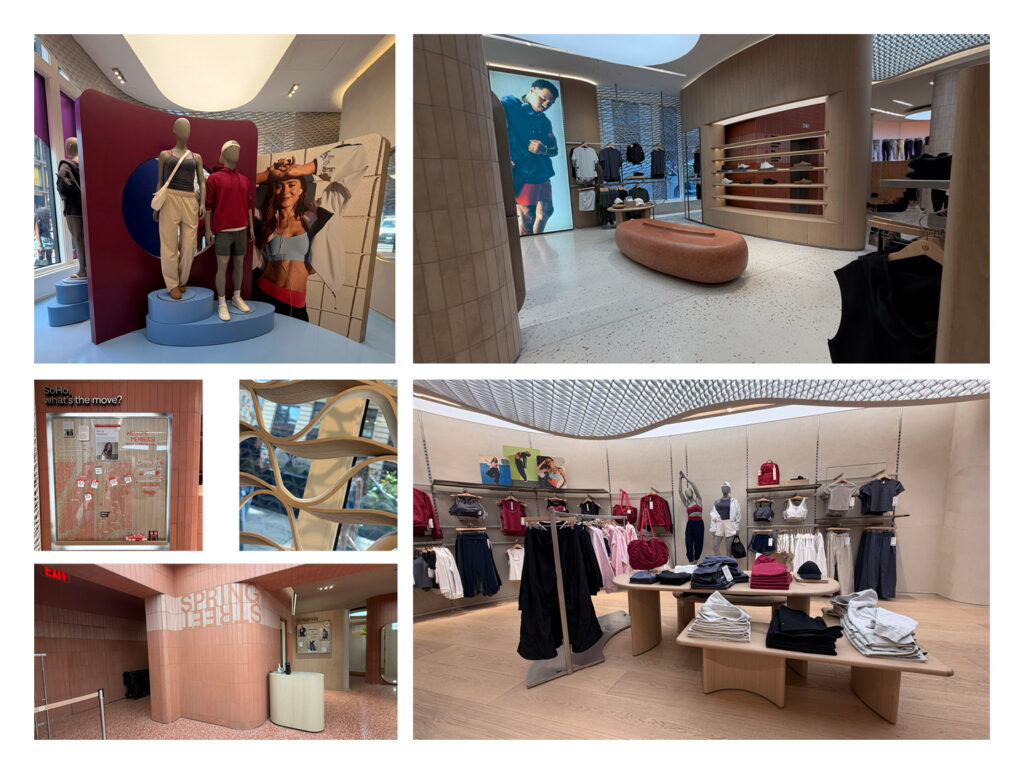
While newcomers push into hyper-niche aesthetics, lululemon remains the benchmark for managing massive assortment volume without creating visual friction. The brand’s store design evolution—, exemplified by its recent 17,000-square-foot flagship rollout—, serves as the industry playbook for balancing high product density with organic, hospitality-inspired environments.

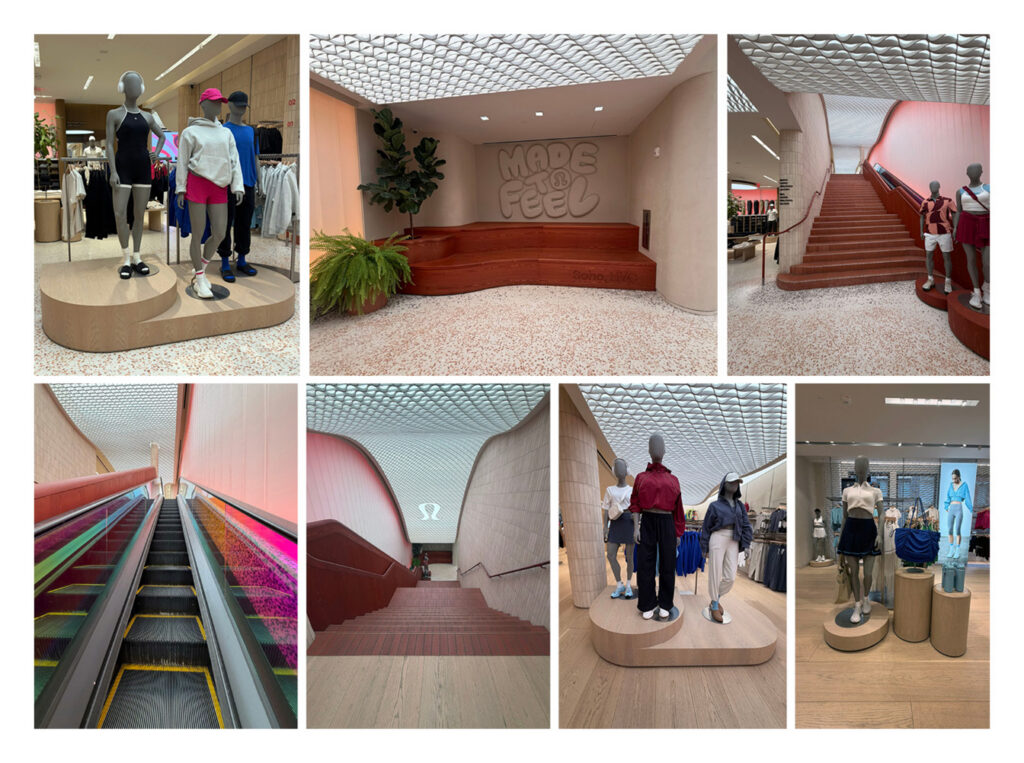
1. High-Density Color Storytelling & “Science of Feel” Wall Mechanics
lululemon’s floorplan carries significantly higher SKU counts than Alo or On, making wall flow critical to prevent inventory fatigue:
- Color-Wheel Merchandising: Instead of grouping purely by garment type, wall bays are organized in strict color-gradient “capsules”. Deep neutrals ground the bottom shelves, while vibrant seasonal drops (e.g., icy blues, rich plums) create high-impact eye-level focal points.
- Integrated Touchpoint Signage: Subtle, sub-category callouts (e.g., Align, Scuba, Wunder Train) are integrated directly into light-wood shelf headers rather than hung as bulky overhead signs, reinforcing fabric technology at the point of touch.
2. Tactile Materiality & Circadian Lighting
To soften the visual weight of heavy inventory, lululemon infuses natural, artisanal textures throughout the architecture:
- Warm Material Palette: Cold steel racks are swapped for hand-carved timber joinery, hand-formed tilework, and bespoke terrazzo flooring. 3D-printed accent fixtures made from recycled ocean plastics nod to sustainable fabrication while adding subtle geometric texture.
- Atmospheric Sky Lighting: Overhead lighting features programmable ceiling installations that mimic the soft, shifting hues of Pacific Northwest daylight. This eliminates clinical store lighting and creates an inviting, warm ambient environment that increases in-store dwell time.
3. Localization & Community Anchors
Visual merchandising at lululemon extends past apparel racks to sell a localized lifestyle:
- Community Boards & Experience Hubs: Dedicated first-floor zones house local run-club maps, ambassador profiles, and community event boards.
- Personalization Stations: On-site embossing hubs and customization counters turn fixture endcaps into interactive service areas, bridging retail transaction with bespoke hospitality.
Key Retail Insight: lululemon proves that high inventory density doesn’t have to feel cluttered. By pairing disciplined color-wheel wall grids with warm timber joinery and localized community hubs, you can move massive volume while maintaining a calm, premium atmosphere.
The following strategic matrix breaks down how top activewear brands use visual merchandising, materiality, and spatial design to communicate brand equity: